Category: Posts
-
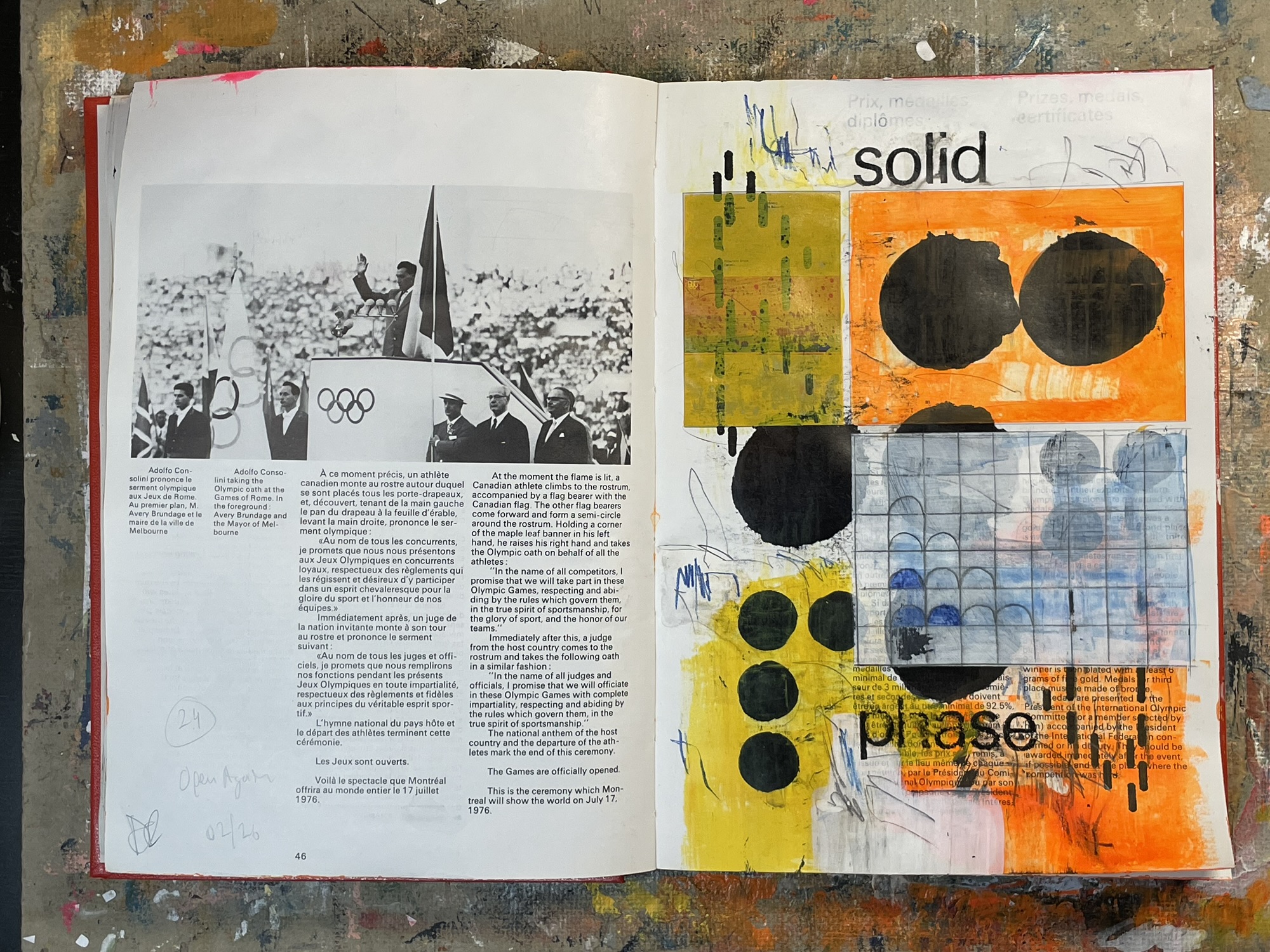
I shared a number of my recent drawings with some friends and it was a nice reminder to keep how and when I share what I do a wide circle. For me at least, I do better at being kind to myself and making more things that feel good to me when I share aspects of that making and the feelings that come with it. One artist friend asked… “Are you just going with the flow when you work on these? Letting your hands make the decisions instead of your brain, like a creative game of Ouija board?” To which…
-
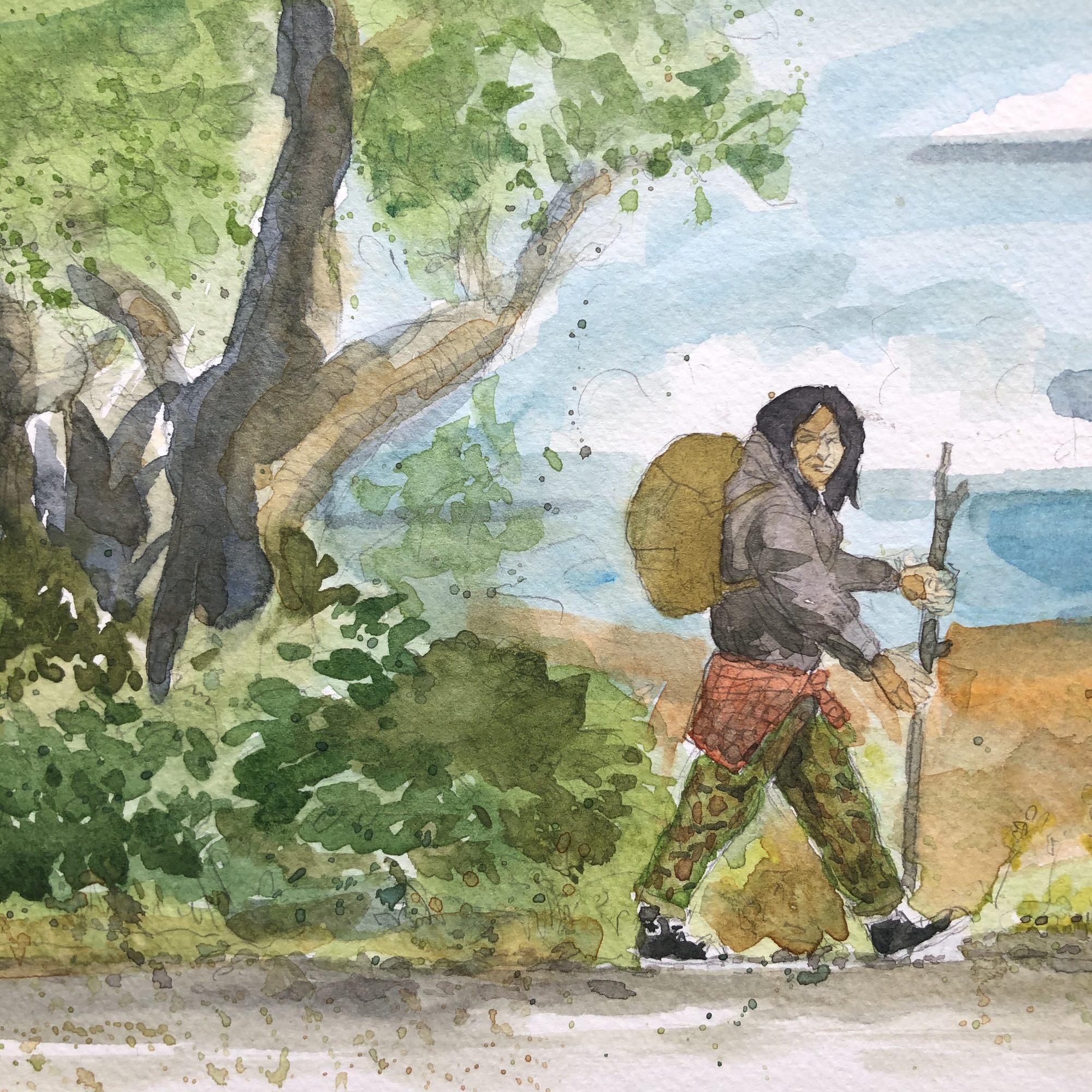
In a recent creative Zoom call, I read aloud from the first chapter of a story/book/? I have been picking away at over the last few years. It’s a story that is piecing itself together based on drawings I have also been doing for years. Reading the story was difficult first because I don’t do well with that sort of performative reading but second because I don’t really know where the story is going yet. I suppose three because the craft of fiction writing feels like a dark art. My friend Mark is adept at plotting out stories and having…
-
I’ve been thinking about inconsistent art practice recently. Consistency is something that receives a lot of attention in art making and it has obvious merits. The call to show up regularly for creative expression is valid. Prioritizing time for making in whatever form it might take is healthy. There’s also a certain pressure for artists to be consistent in what we make. A pressure to develop a recognizable style and to reliably produce new work. Even the well meaning consecutive 30, 100, 365 day art challenges place a value in repetition. These can be powerful in jumpstarting a creative pattern…
-
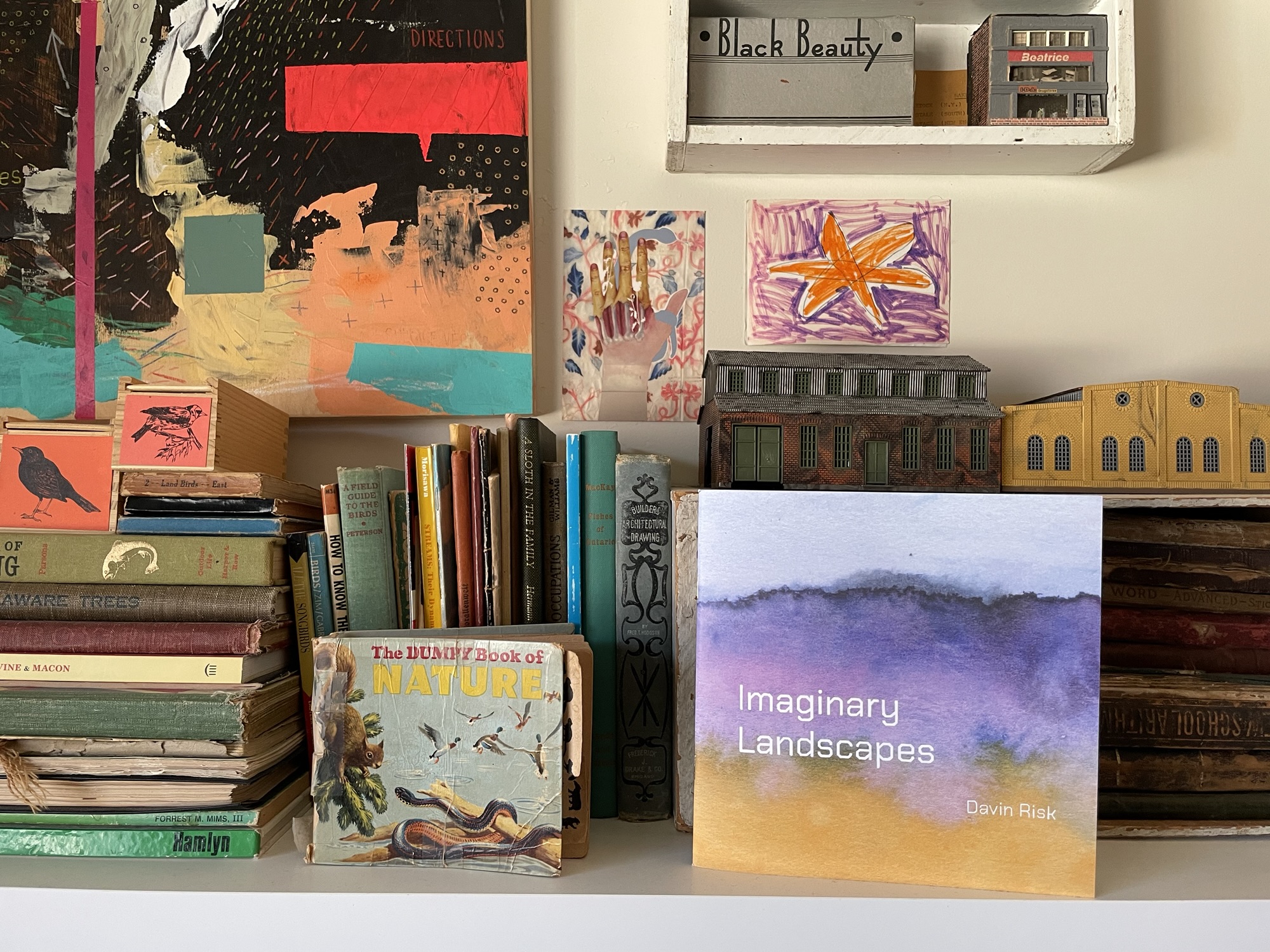
At least this is how I made one. You should make one too! I’m not usually someone that feels like the way I make things is of much direct value to other people. I feel the same about other artists’ work. I am interested in why artists make what they make and how they connect to a process for making but not as much in the techniques they might use. I know that I primarily learn and discover from direct experience and less so from following someone else’s patterns. In making my art book Imaginary Landscapes recently, I did realize…
-
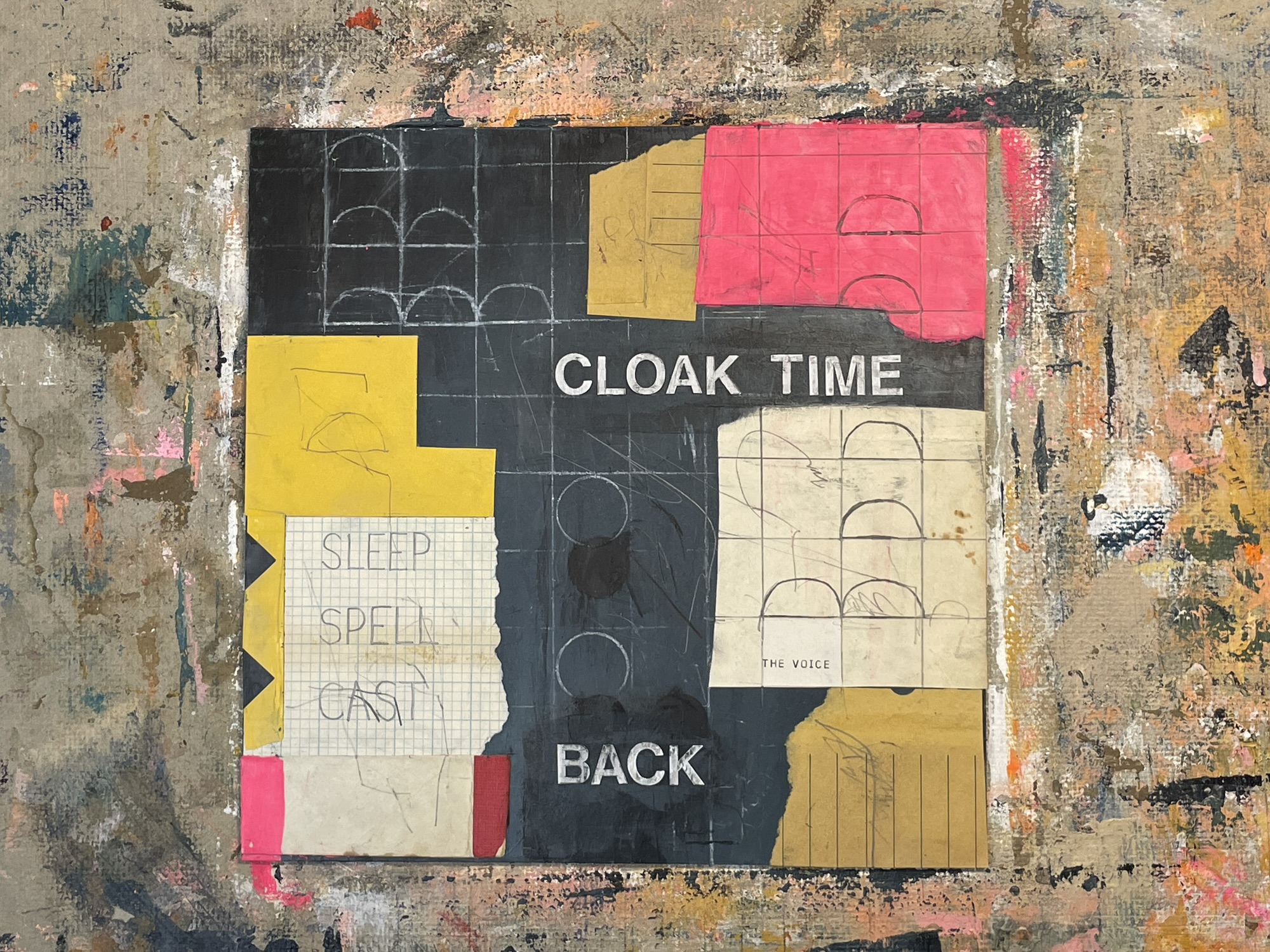
My connection to art making recently took a more curatorial turn. As I’ve showed in my last post, I was drawn back to work I had made in 2020 and made a small book from that work that I published. I feel very proud of the book and the revisiting this watercolour work in such a positive way has been helpful to me. My association with past work hasn’t always been a good one. Looking back on things I have made can sometimes be clouded by unwarranted self doubt. But I saw my own sense of beauty in the small…
-
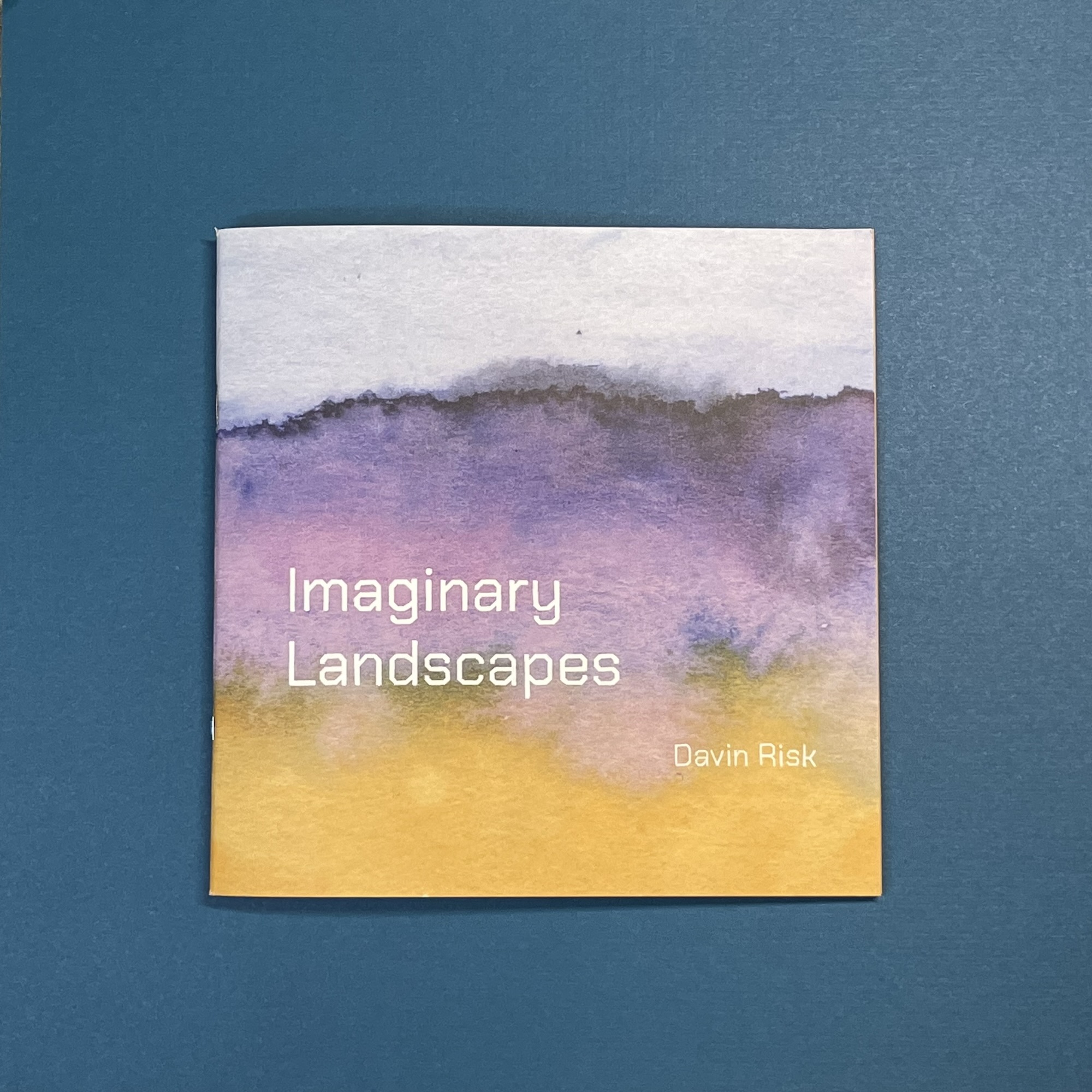
I’ve published a new art book! Imaginary Landscapes is a 7×7″ 32-page artist designed and published compilation of a series of my intuitive abstracted watercolour landscapes. This book has 34 paintings of natural spaces created purely from imagination and the properties of pigments in water. These small paintings, originally made in 2020 at 3×3″, have been sequenced and set as new complimentary pairs. Many of the paintings are presented at their original size as I quite love that scale as handheld portals into each of the natural worlds I painted. But part of my interest in pulling them together in…
-
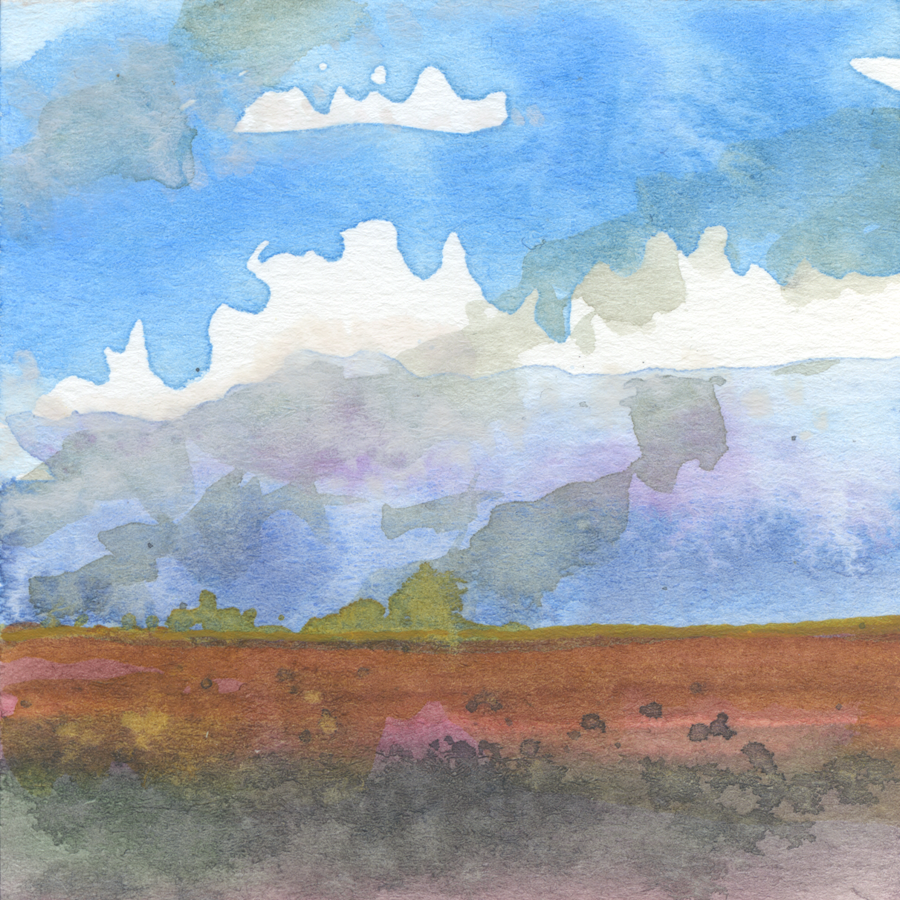
A recent post I made to Substack’s notes has been my only experience there of what is, for me at least, a “viral” post. I posted five images from a series of small watercolour “imaginary landscapes” that I made in 2020 and wondered whether they might make for an interesting zine. While I try not to pay too much attention to the number of likes and shares I get for things I post, it was hard to ignore getting roughly 500% more likes than one of my usual notes. The feelings I’ve had so far around those images getting far…
-
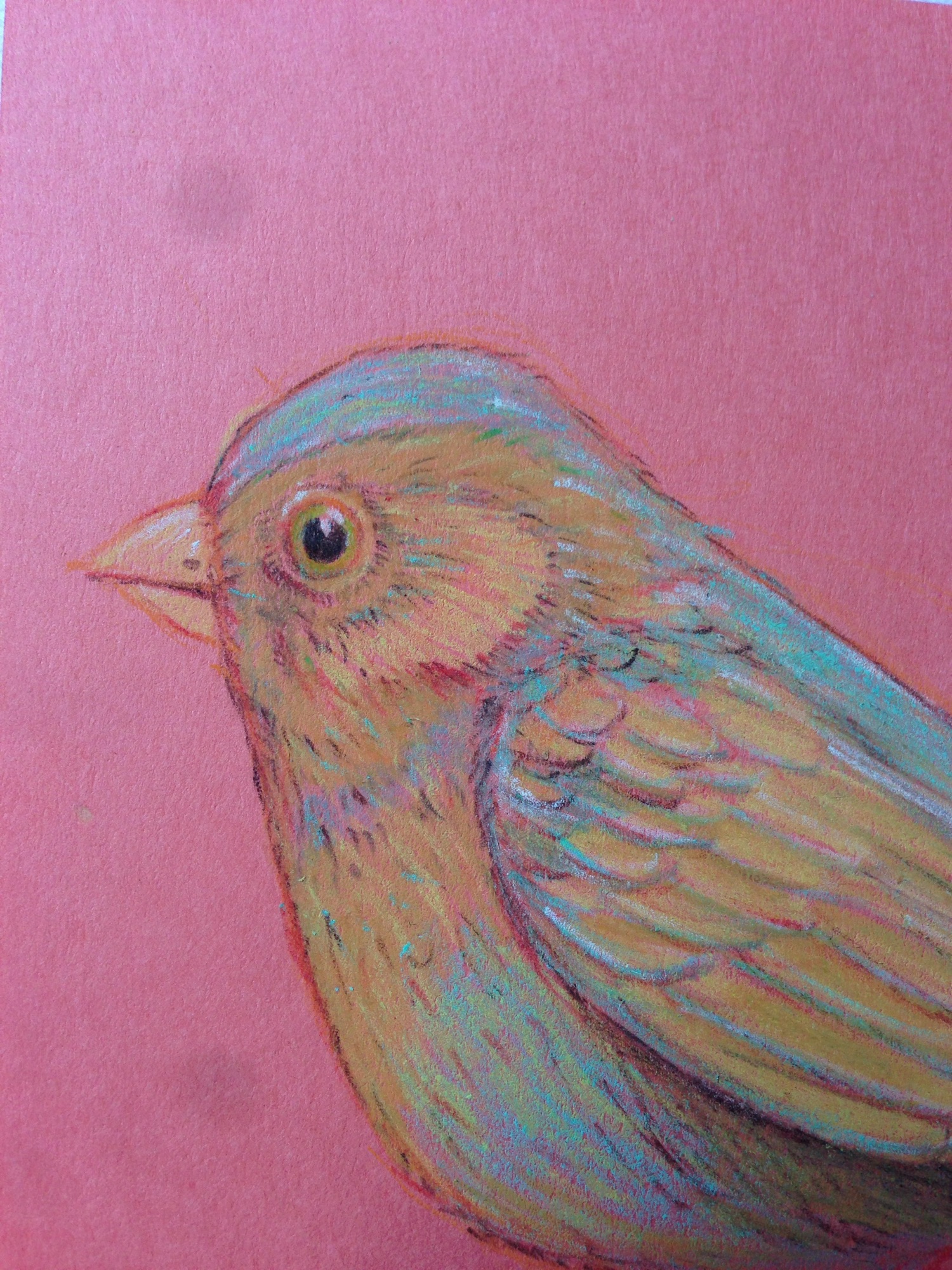
The other day a friend referred to something they devote a lot of time, energy, skill, and heart to as a hobby. I didn’t say anything in the moment but it struck me as wrong. This is something they are passionate about and have spent years working on but it isn’t how they earn an income. I felt that if that’s the measure of a hobby then many of the things that make up what I consider to be the best moments of my life and experience would qualify. Hobby feels like a diminishing term that tucks a vast set…
-
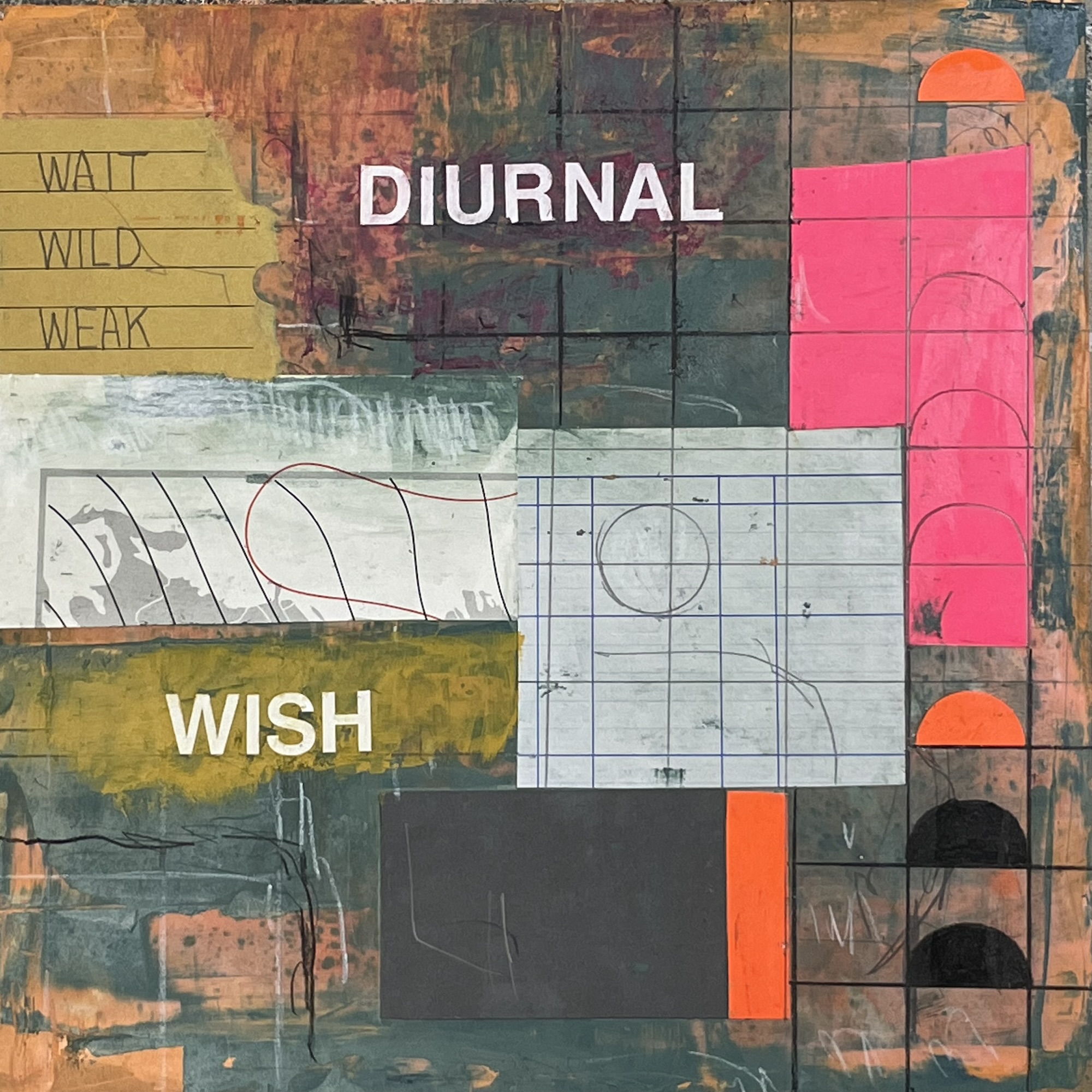
Openwork. An ongoing series of drawings. Thoughts on the vulnerability of making and the further embodied sense of what making means in a body. The way we have been taught to think and talk about art is in the context of groups, series, collections, exhibitions. And artists, we are told, are defined by movements, periods, and ultimately oeuvres. But day to day, artists’ work is made in fits and starts and often without planning or forethought. That’s not to say that every artist works the same way and some people have far more structure around their work than others. I…
-
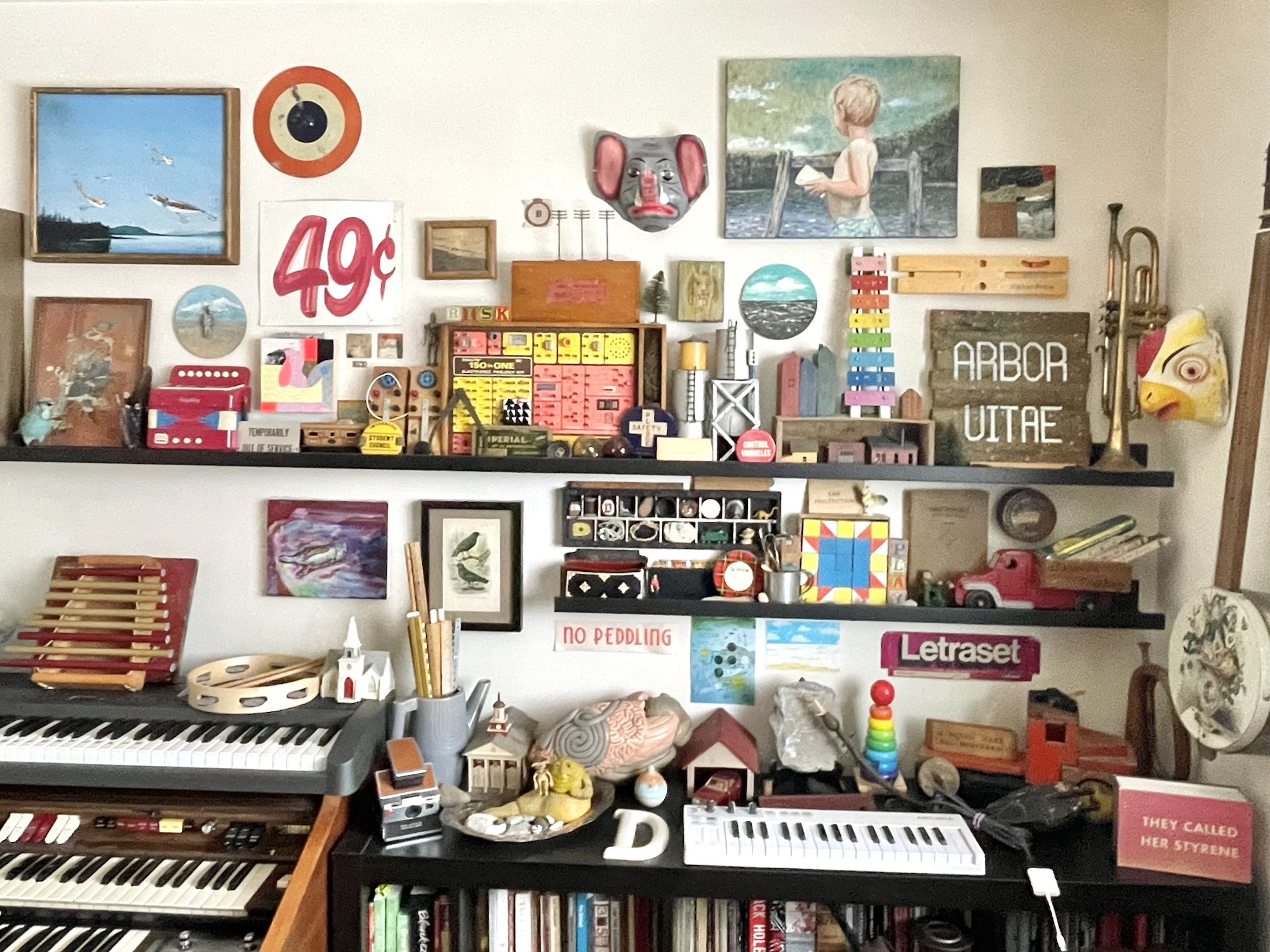
During most weekdays I spend some portion of my day in video calls. I work remotely for my job and those calls are the way I attend meetings and have one-on-one check ins with the people I work with. I mention this mostly because, over the recent holidays, I spent a couple of days reorganizing my workroom here at home and one of the goals I had was finding better ways to find myself in a room that I spend a lot of paid time in but that beyond that is my room in our home. In the video calls…
-
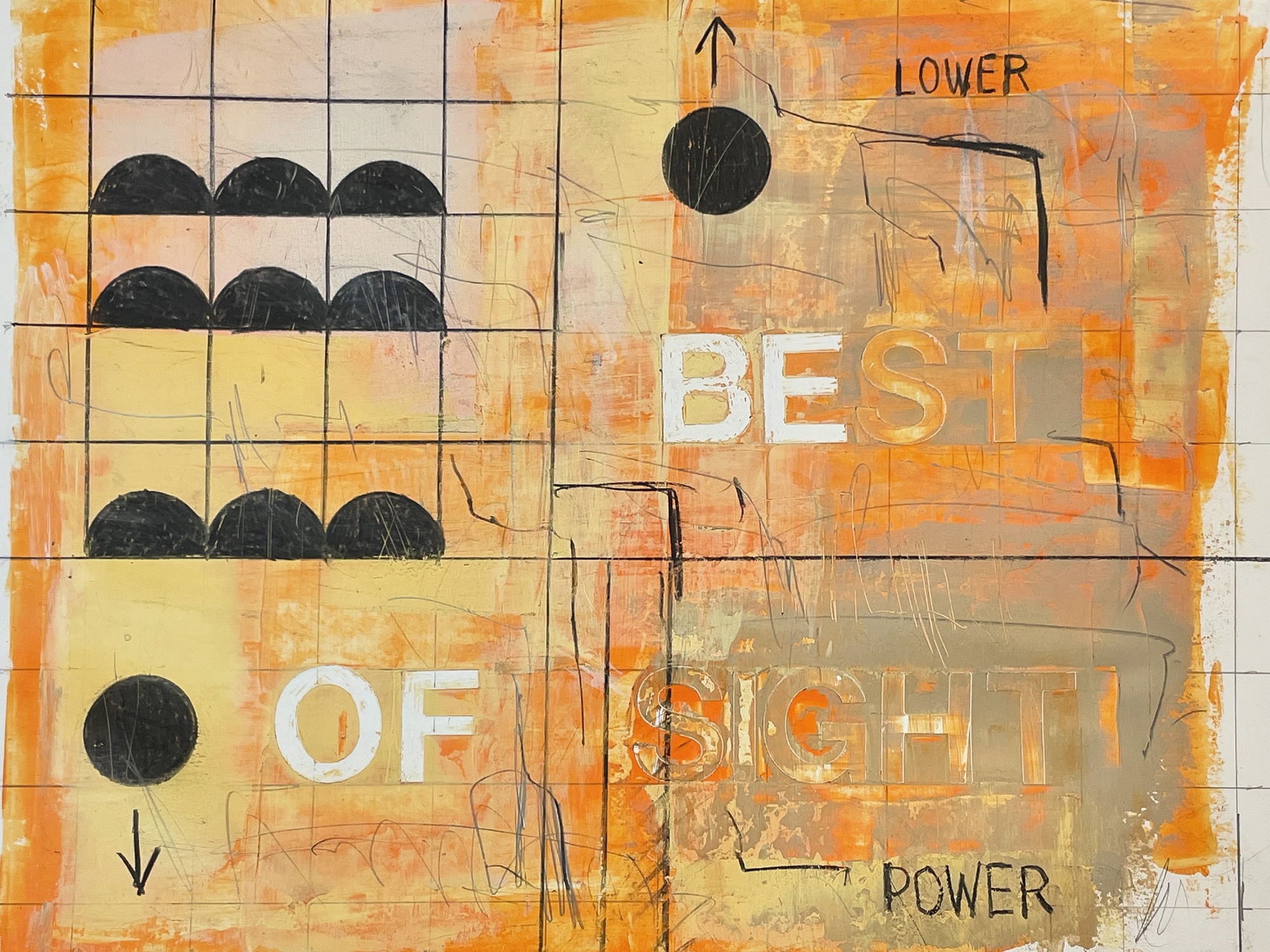
I refer to myself as a generalist. The main aspect of this for me is simply having an interest in following a variety of creative and intellectual threads. I’m curious about where one thing connects with another and either forms a delicate lacework or becomes tied into impenetrable knots. … I recently ran into the phrase “niche down”. I mostly saw the phrase in reference to the successful building of an individualized career and audience. The idea being that by finding a self-defining niche, you can gather interested people to you more readily. I don’t know where this first came…
-
We use words to know better how we might speak. We use images to know more how we might see. This is part of what art does for us. It weaves aspects of ourselves together to show us ourselves. Not all art does this with strong intention but the effect is the same regardless. Art is a window framing humanity — sometimes a mirror. This sounds grandiose and I don’t mean to say that that artists are some higher beings with a rarified viewpoint. Artists are just people with a curiosity for how words, images, sounds, and forms connect with…
-
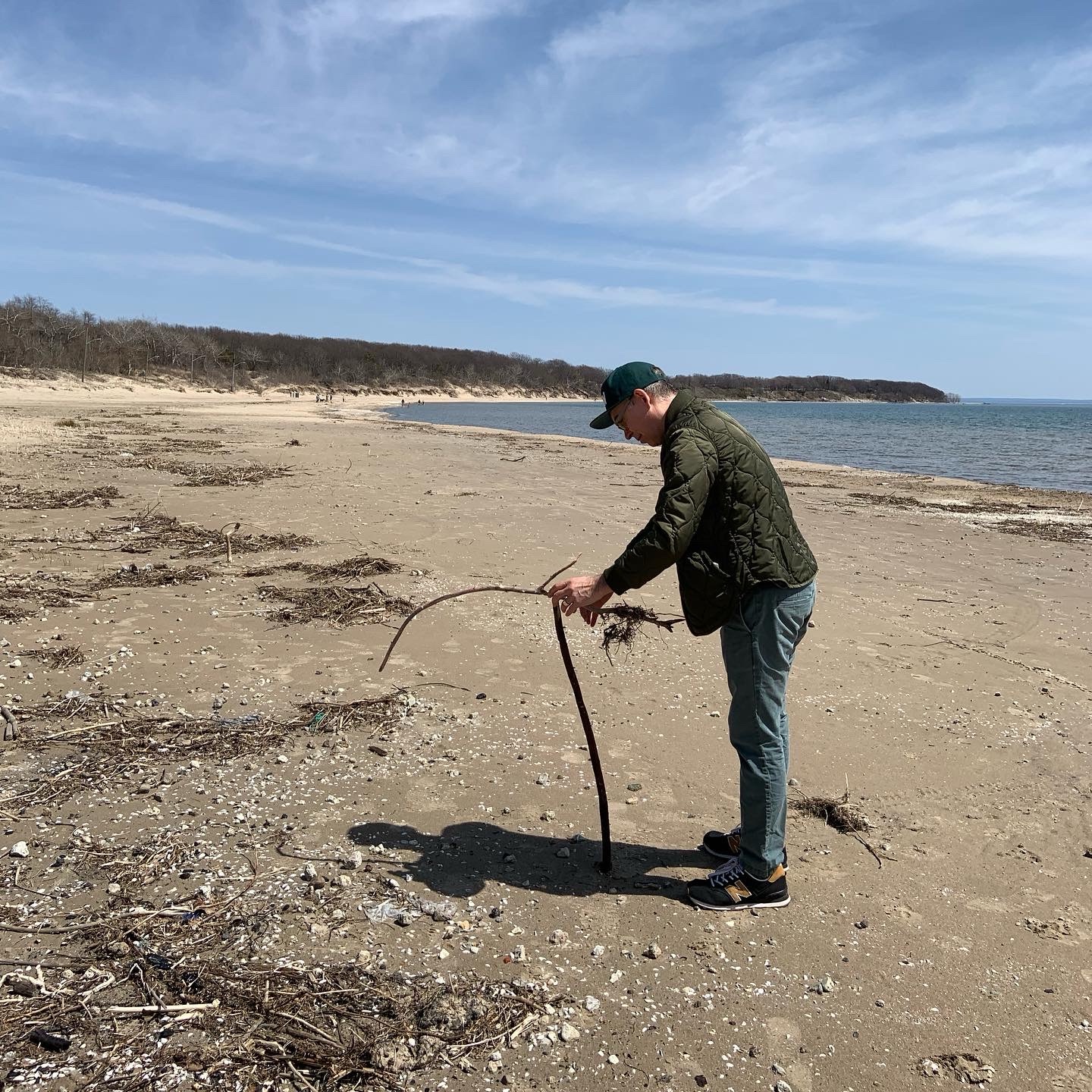
Yesterday my partner Gayla and I spent a bit of time at one of the small public beaches that is close enough to our place to be a quick drive away. We live in Canada near the northern shoreline of Lake Erie. From that beach we can look across the relatively small and shallow waters of Erie and, on clear days, see the shoreline of New York, a small wedge of Pennsylvania, and possibly a bit of Ohio. This beach has a small lightly tended woody park between the thin cottage service road and the water. Tall oaks, shag bark…
-
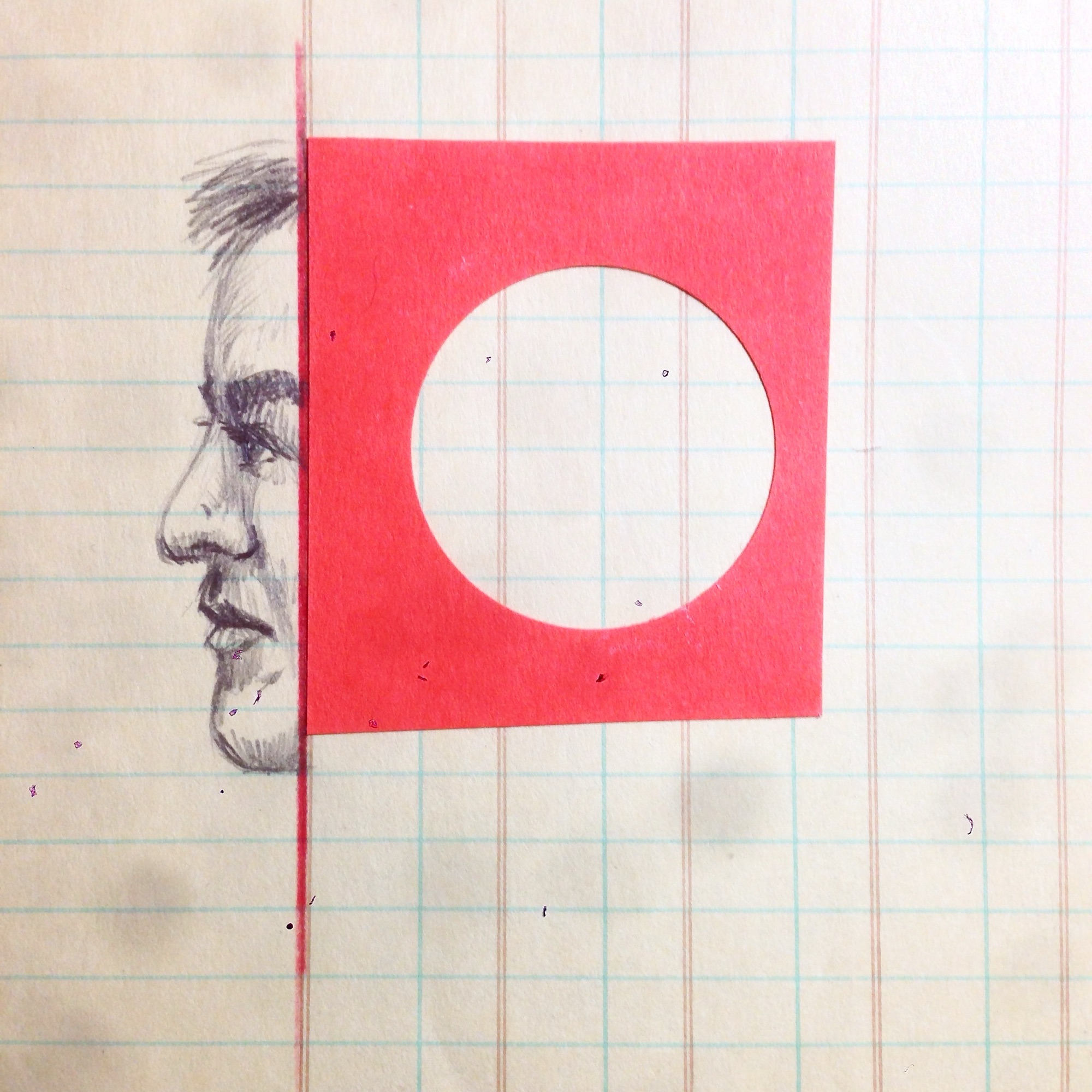
In graphic design, grids are often used as the scaffolding that gives page elements a structure to align to. The underlying grid of a book page might supply a set of ratios for how text sizes relate to each other, how an image sits on a page, and even the subtleties of a where a page number hugs a corner. In many scientific and technical applications, grids become ways to translate measurements into a reliable visual form or they might form the cell structure for a matrix of data. Maps have a fundamental grid as latitude and longitude lines help…
-
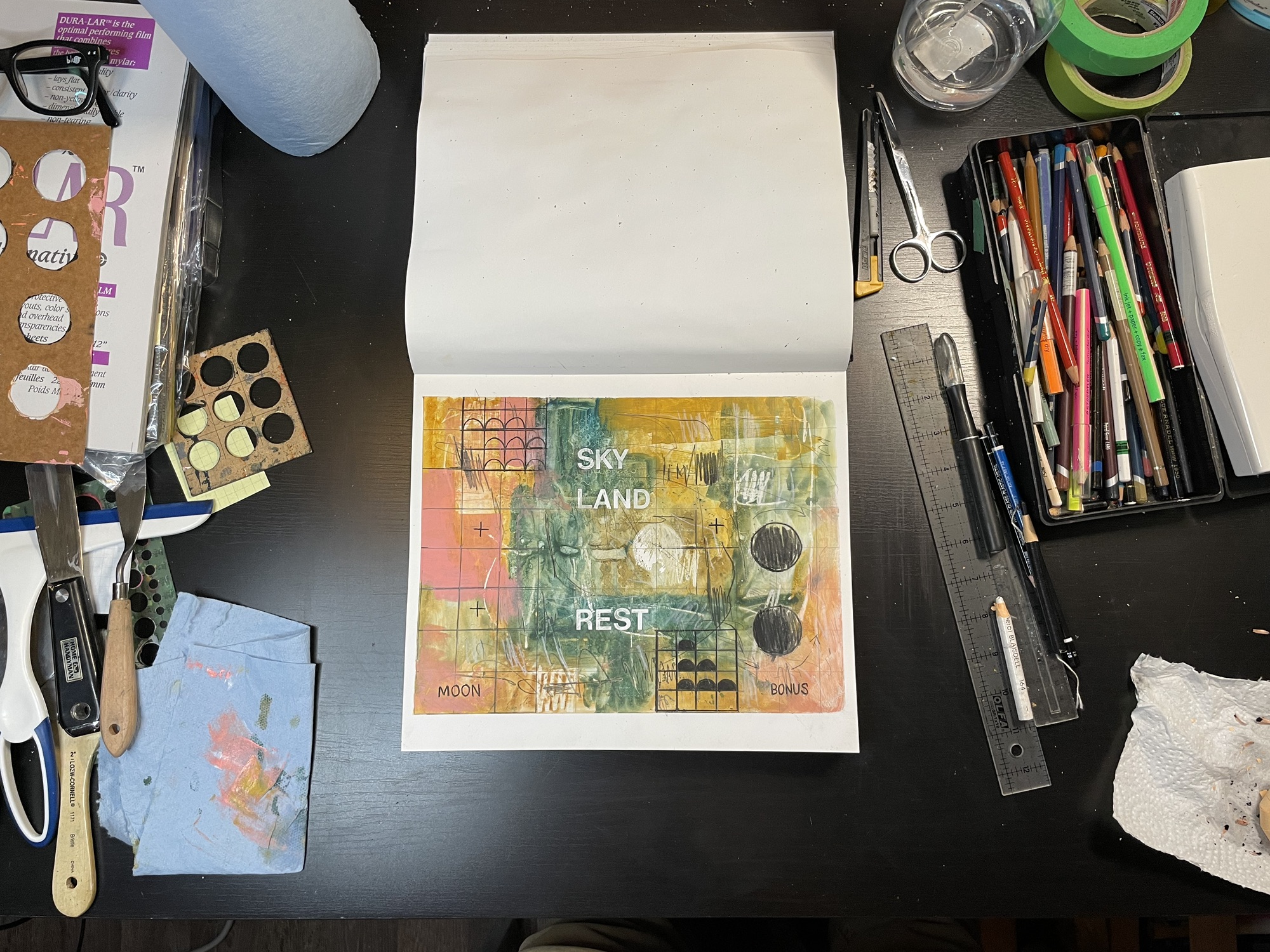
I have worked for many years now as a Play Designer. Explaining what this means is never a simple thing but I’ll try here as it may inform the rest of what I write which is still bubbling up for me as I type this. I work for a company that makes digital play and learning products for very young children. I design open playful and playable digital toys with a cast of cute characters that primarily end up on phones and tablets and are mostly played with by preschool-age kids. The job is empathy balanced with function and it…
-
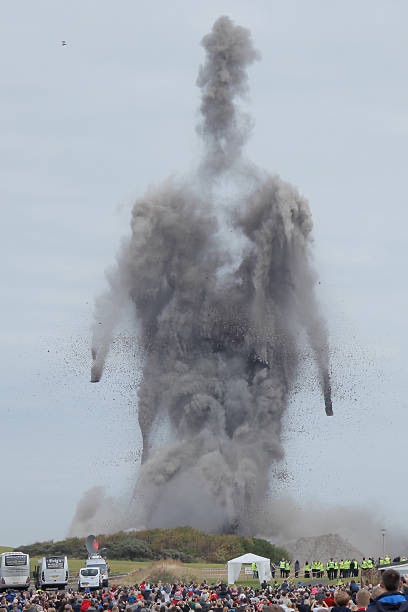
This is a bit of an origin story for one of the ways an image can mark a moment of change. It’s about how a titan of dust let me know I could trust myself more as an artist. … While most of my art making is connected to abstraction and intuitive mark making, I do occasionally make a more straightforward landscape or figure drawing. But I was thinking back tonight to one particular drawing that sat a bit between those two modes. In 2015 I had started making abstract drawings that I ended up calling Dots Series 1 &…
-
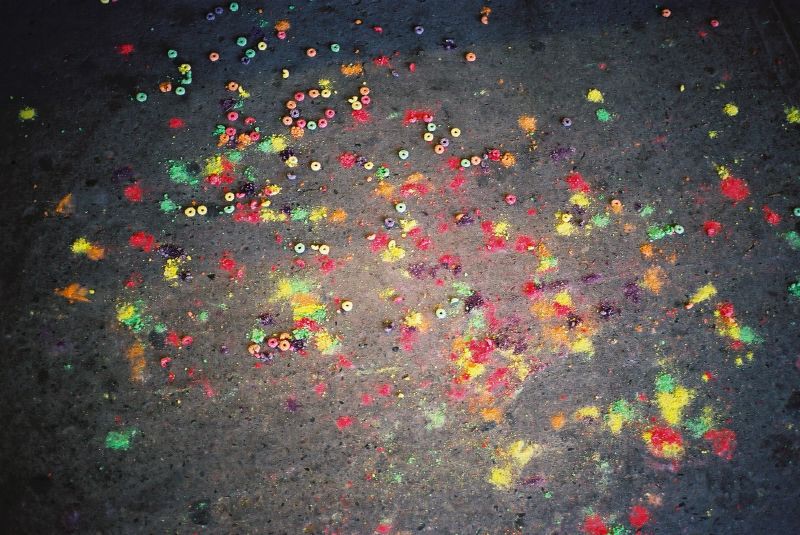
Does art lay in wait in an artist’s materials? Is there a drawing inside every pencil, a painting in every tube? Do the artist’s hands contain the art or does it travel from the head, electric and formless, commanding the hand to make tangible from mental? In my conscious mind, there is never any fully formed art. There can be concepts, modes, structures, tools, and patterns that I choose from towards the idea of making art. But there is no plan or precognition of a final state or even its process in my head. I make choices in the moment…
-
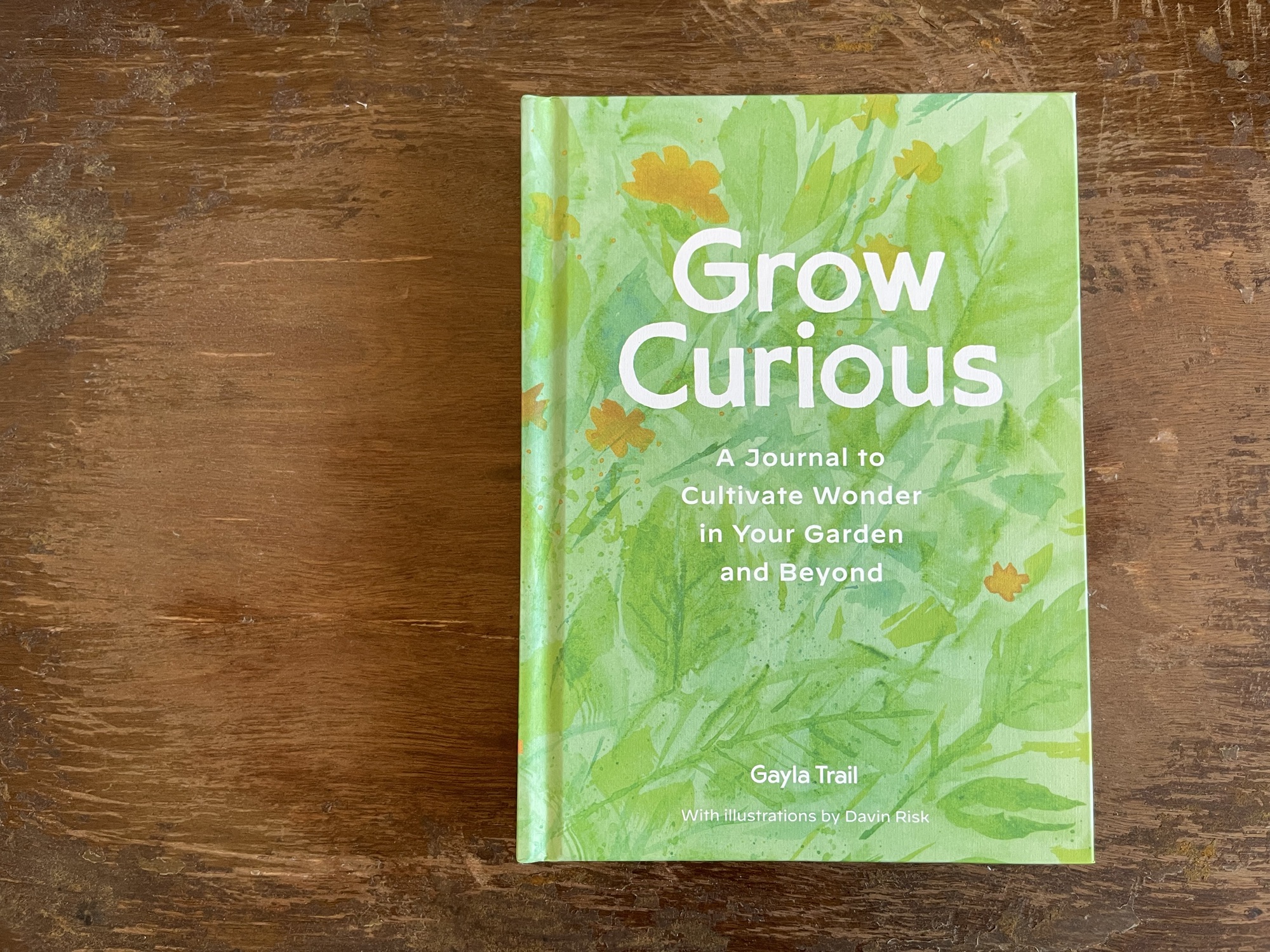
Back in 2016, my partner Gayla Trail and I collaborated to self-publish her fifth book, Grow Curious. She was the author and I did the design and artwork. I don’t talk about my design work here as much but I have been working as a designer since 1994 across a variety of media and formats. My design and art practices heavily inform each other. Grow Curious was the fourth of Gayla’s books I designed. We used Kickstarter to successfully fund a two-colour offset print run of 1200 copies. It was a labour of love and each of us pushed ourselves…
-
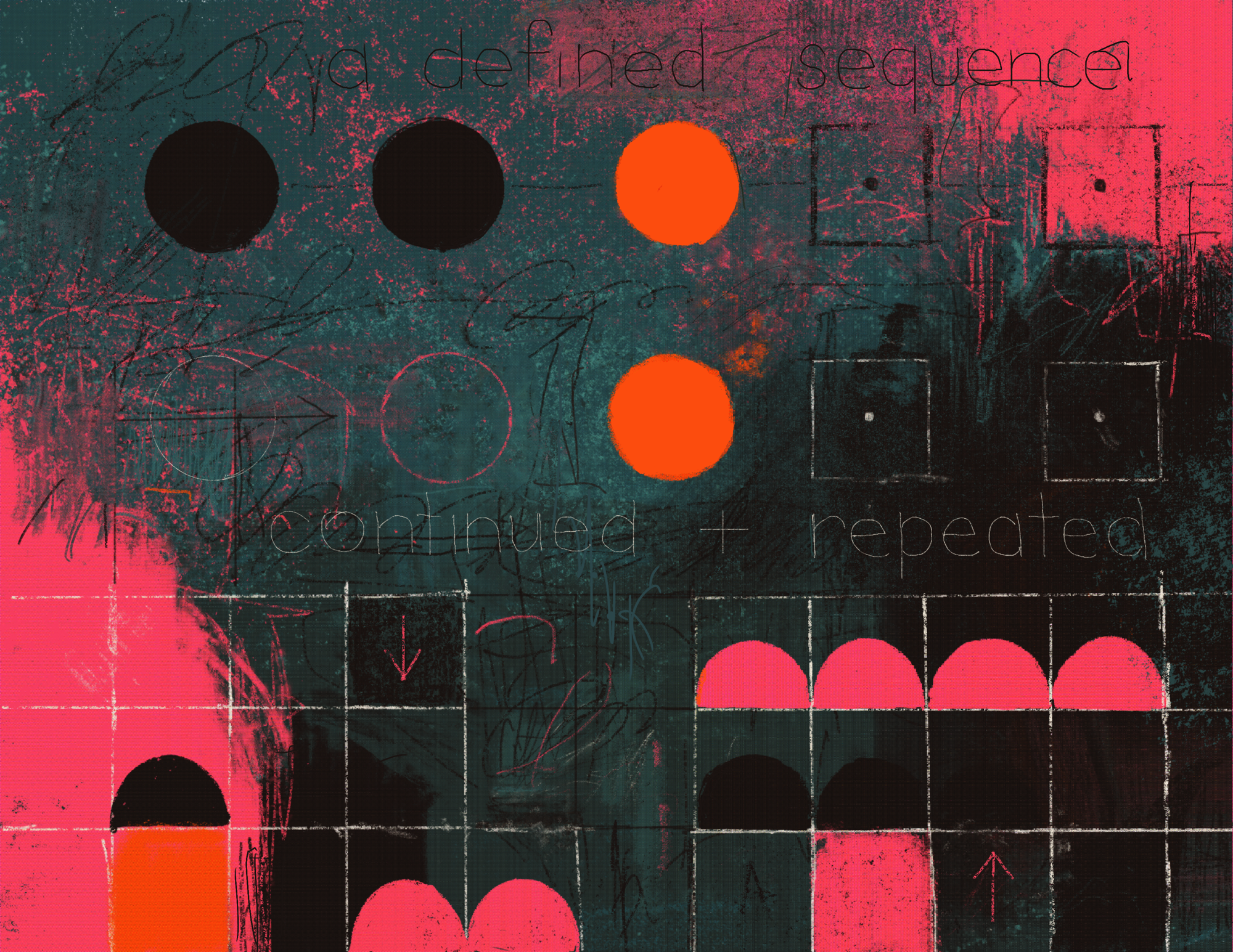
Since my last post I have continued drawing digitally in Procreate and testing how it feels to both pull from and challenge the habits and modes of drawing on paper. I’m finding myself distinctly enjoying drawing digitally. As I said in the last post, I am using an Apple Pencil on a ~10 inch iPad. I applied a Paperlike screen film which adds a very subtle “tooth” so that the Pencil feels less like hard plastic on smooth glass. I’ve started using some digital brushes like simulated halftone patterns which I have used lightly in the past on paper usually…
-
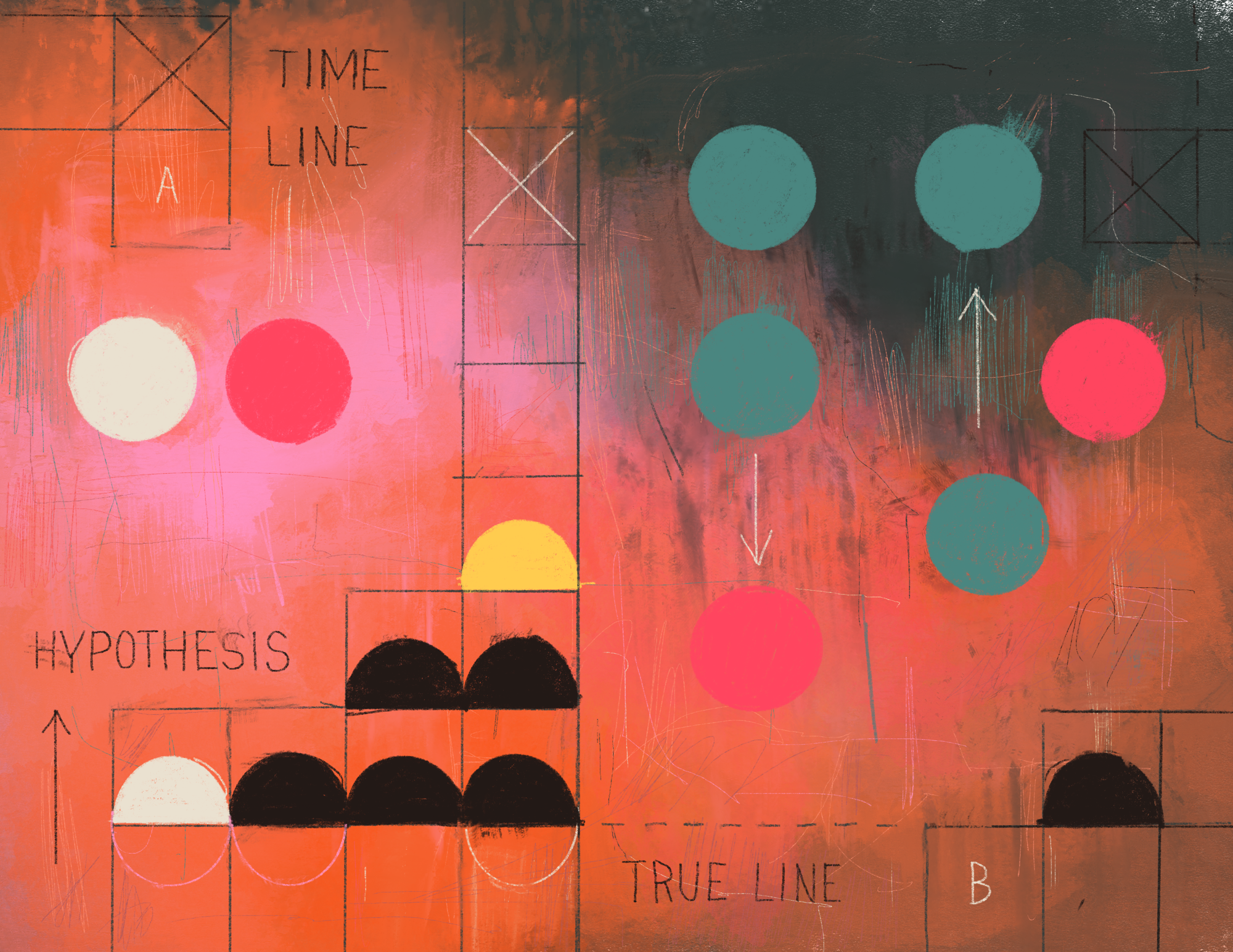
A blank drawing surface stares back as a challenge. The smooth surface of a page says nothing about what it wants. A fresh sketchbook or canvas can stop many artists in their tracks. Often the way I will approach a blank page is to immediately make “random” marks and forms — scribble, smudge, glue, scrape, smear — to break up the space of the page. Because my approach to art making is intuitive, I rely on an interaction between the surface, the tools, and my hand to further the process. I react to the surface and then to my own…
-
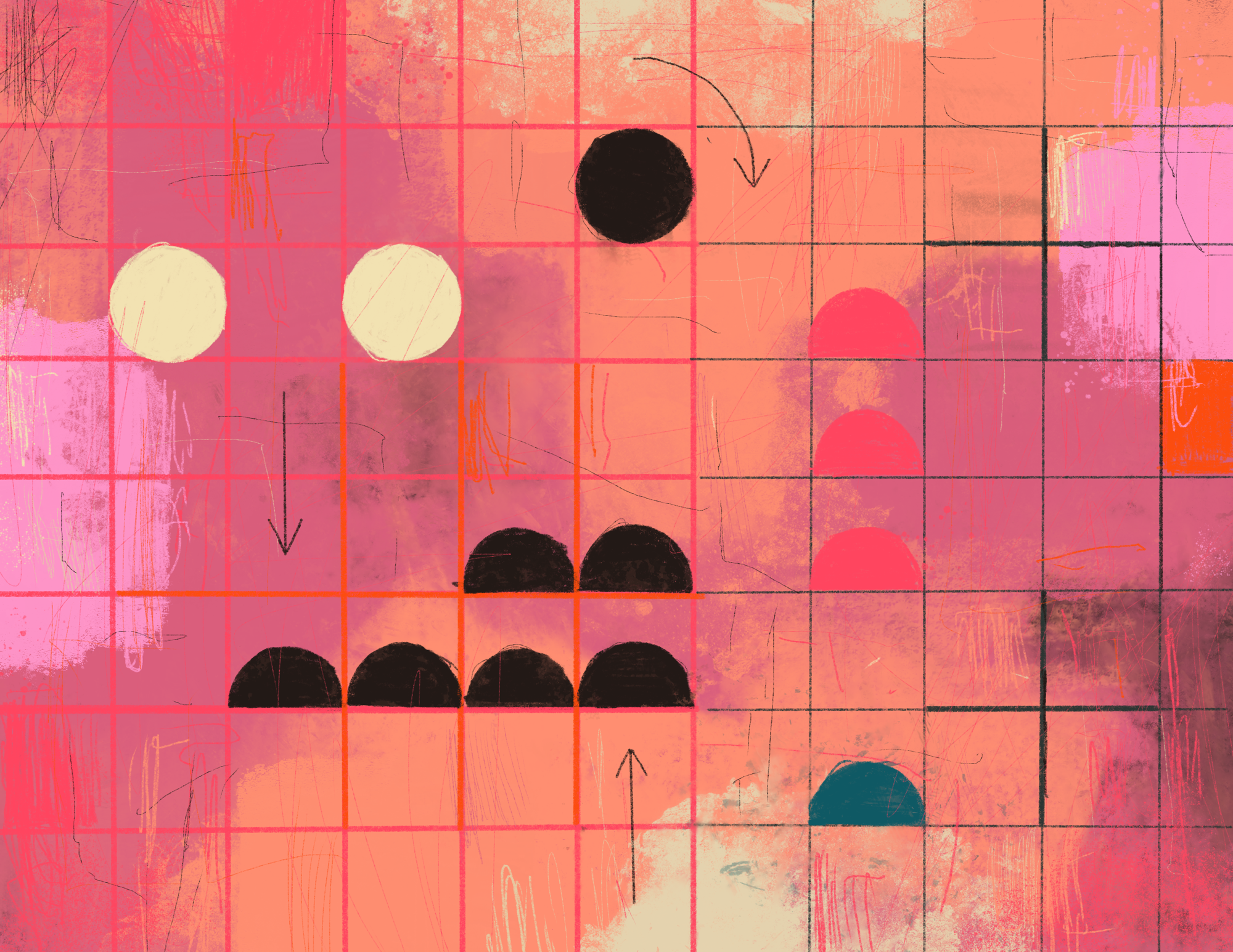
The how of making art is a cottage industry. There are countless classes and tutorials about the right tools, techniques, and mindset for people that want to make art but feel for whatever reason that they don’t know how. More often than not, these same people are also looking for some form of permission to be creative. They want some structure, purpose, and maybe even a set of achievable goals before stepping into something that feels like it requires mastery. And belief in mastery implies that the majority of us are not masters. What a lot of people want out…
-
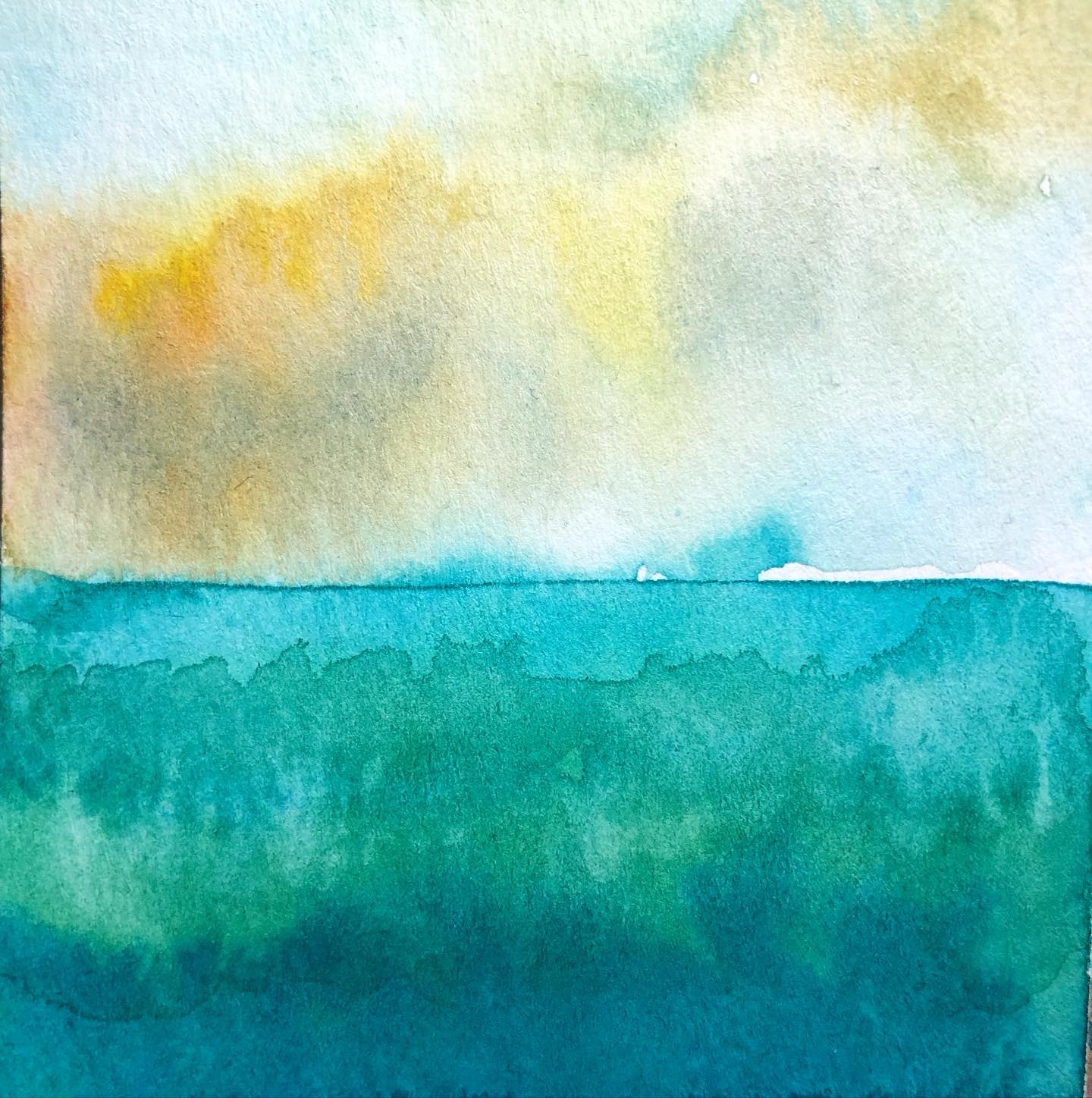
I think of my six year-old self and my friend Steve. It is the first day of first grade. Summer’s tint is still glowing from our skins. We wear the defiance of hot days roaming between shadows and light. Peanut butter and jelly and soft brown bread remnants on our faces. We are walking, unhurried, along the sidewalk. We are stuck in the adventure, the freedom, of summer. Lost in the memory of wild ranging and wandering in what felt like a vast unmapped wilderness but was really just a few looping residential blocks. We strip summer clothes off, down…
-
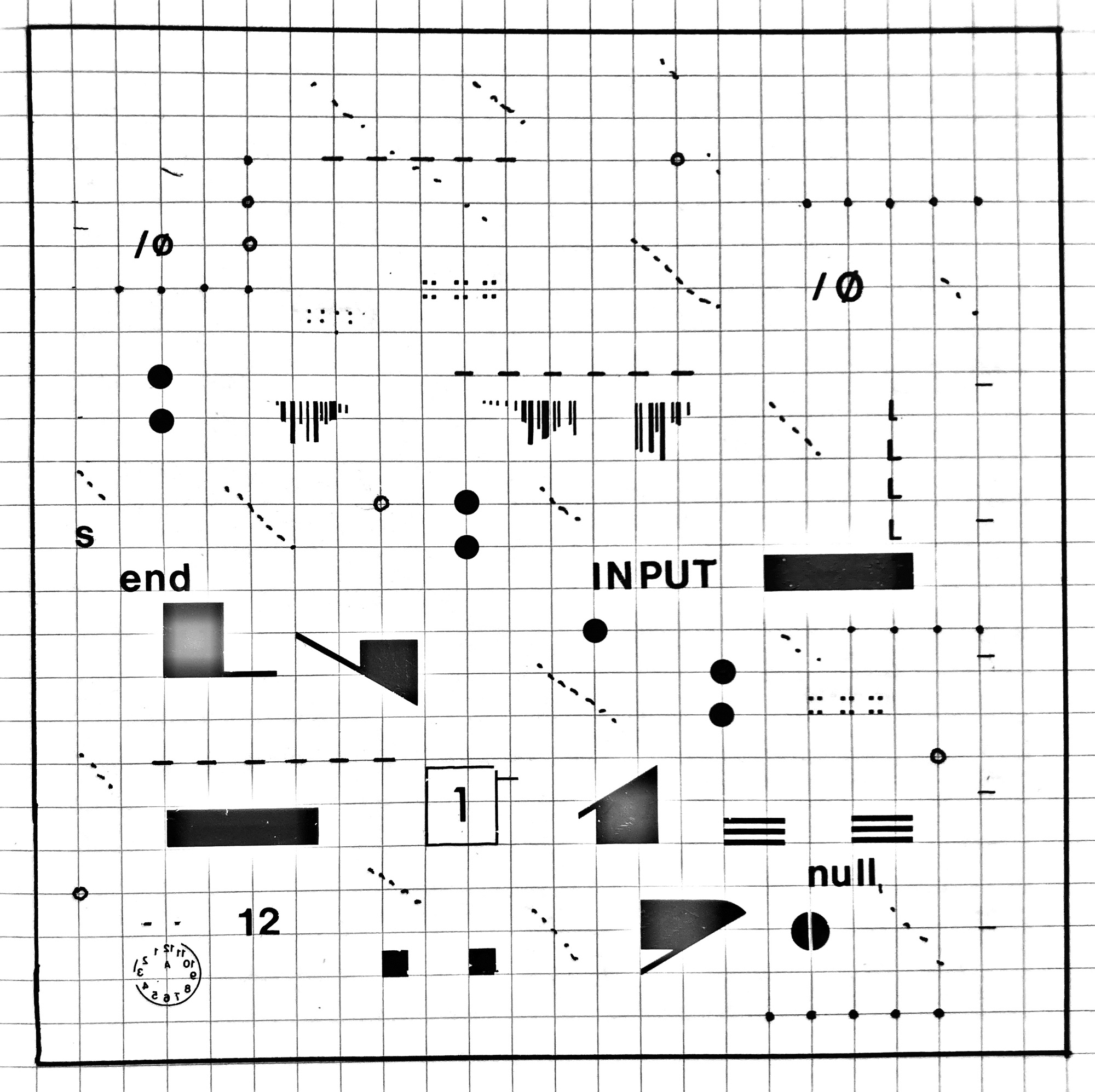
I’m going to revisit some older work again since it’s helping me to look back at a variety of work and see what it meant for me to make it when I did. Starting in 2018, I had begun working with sound as a medium — using the making of songs/soundscapes as a different form of connecting with a need I had to express that wasn’t fully coming out visually. I had made snippets of music before this point. In the early ‘90s at university, I had a late night radio show with a friend and we often made odd…
-
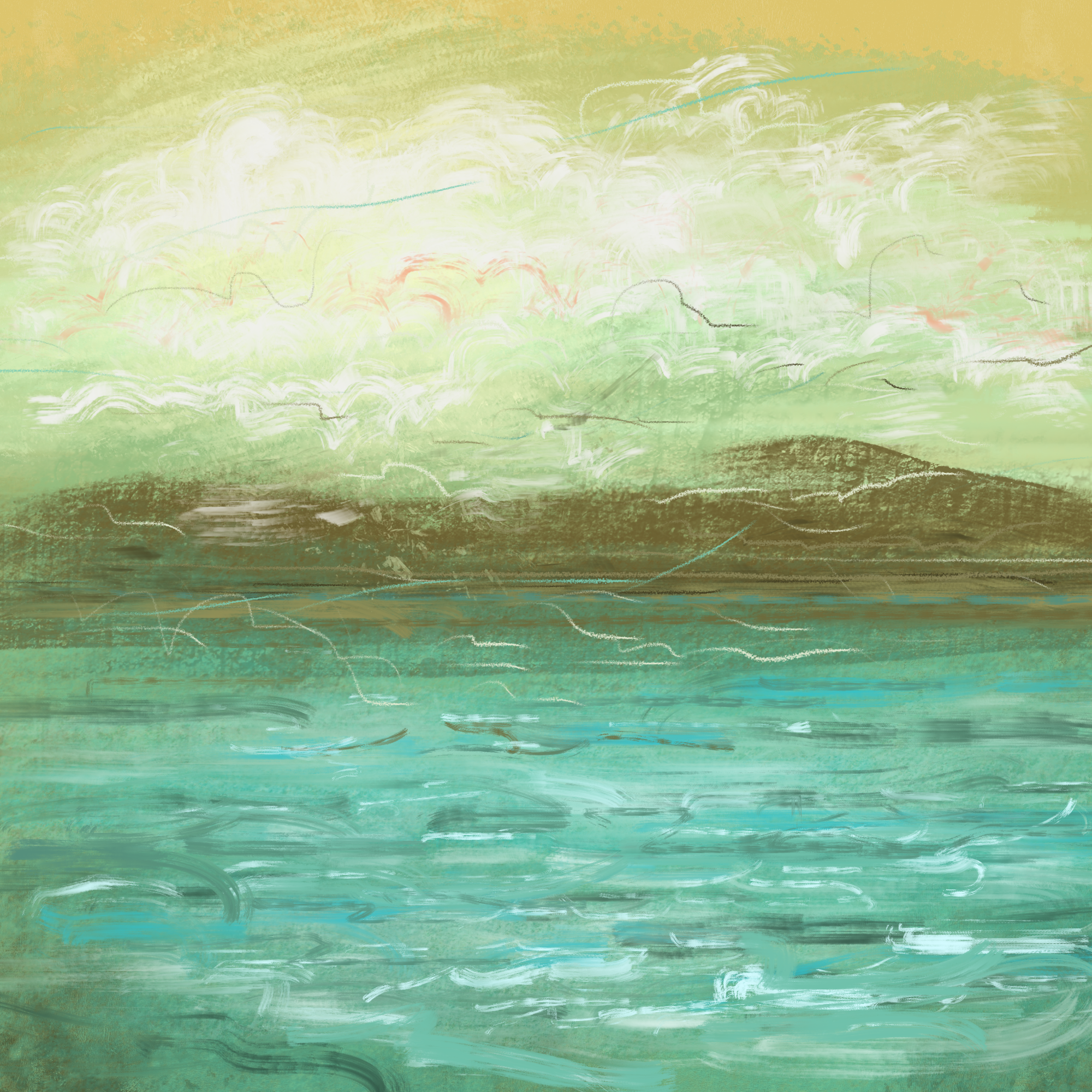
In the previous post, I showed a series of abstract drawings I made on my phone. Digital finger painting. Making those miniature images of line and colour in motion were a therapy for me at various times. A way to pull emotion out of me expressed as visual motion. As I described, working on my phone was a space between other spaces. A way to duck into a creative space when the circumstances of a time or place didn’t allow for other modes of expression. What began as pure abstraction and motion studies in those phone drawings lead somewhat unexpectedly…
-
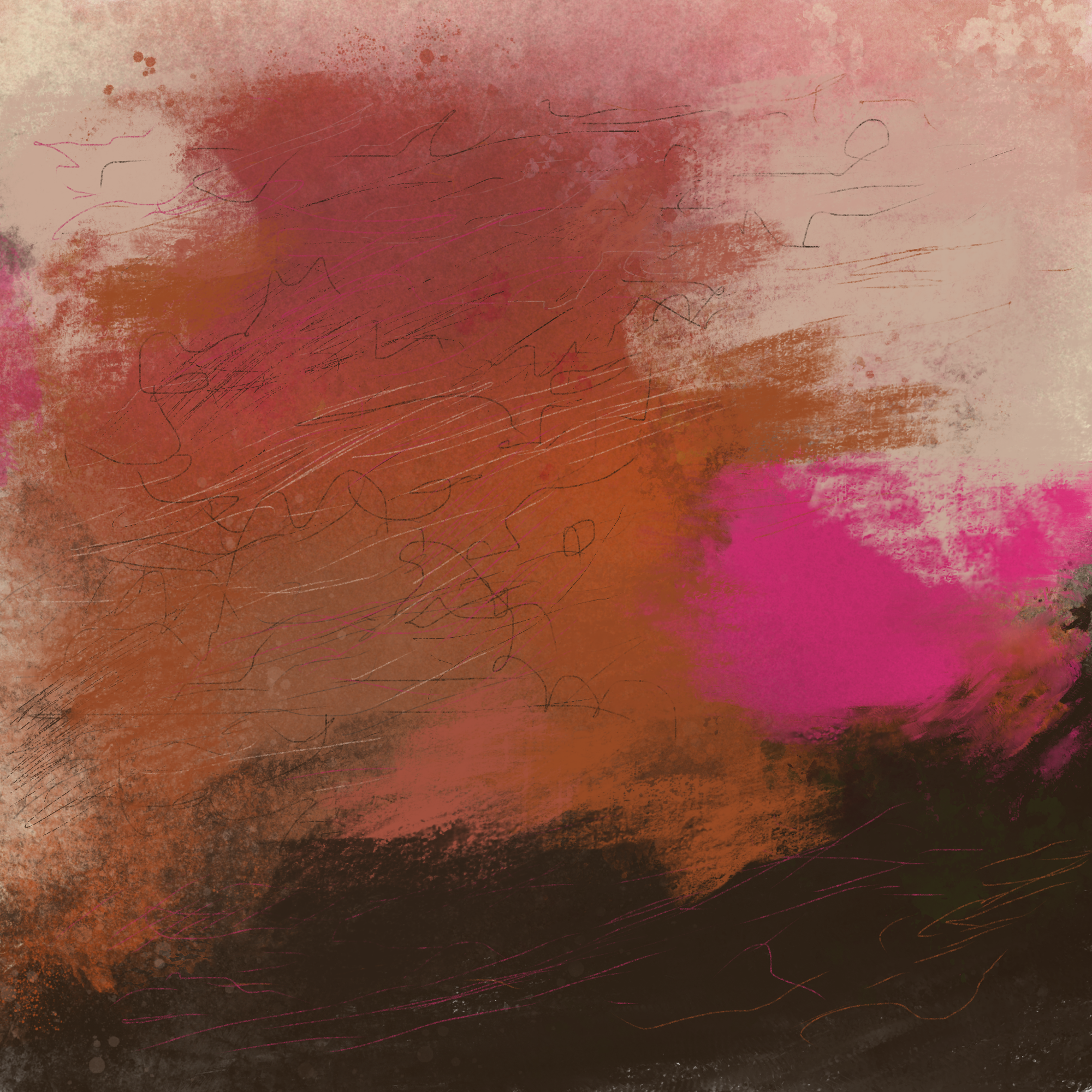
The glossy glass slabs most of us now have with us in pockets and bags — the ubiquitous relative supercomputers that we mostly take for granted — are not inherently the most expressive artistic tools. “Phones”, in a short number of years, have supplanted the regular tools or at least augmented the structure of many creative practices. I have no real urge to get into how technology has shaped art and the lives of artists over the last few decades. It’s a deep topic of discussion and study but my interest is more homely. I’ve always had an fascination in…
-

In 2016, my friend Aaron Leighton asked me one day at work if I would be interested in collaborating on some artwork. We were both at a point where we were wanting to explore new things creatively and Aaron had been intrigued by some new drawings I had started making. [Dots: Series 1] I enthusiastically said yes. Aaron didn’t have any specific goals in mind, just to start something and see where it went. He suggested we pick a simple but somewhat directive format. My work at the time were mixed-media drawings on birch wood panels and we agreed to…
-
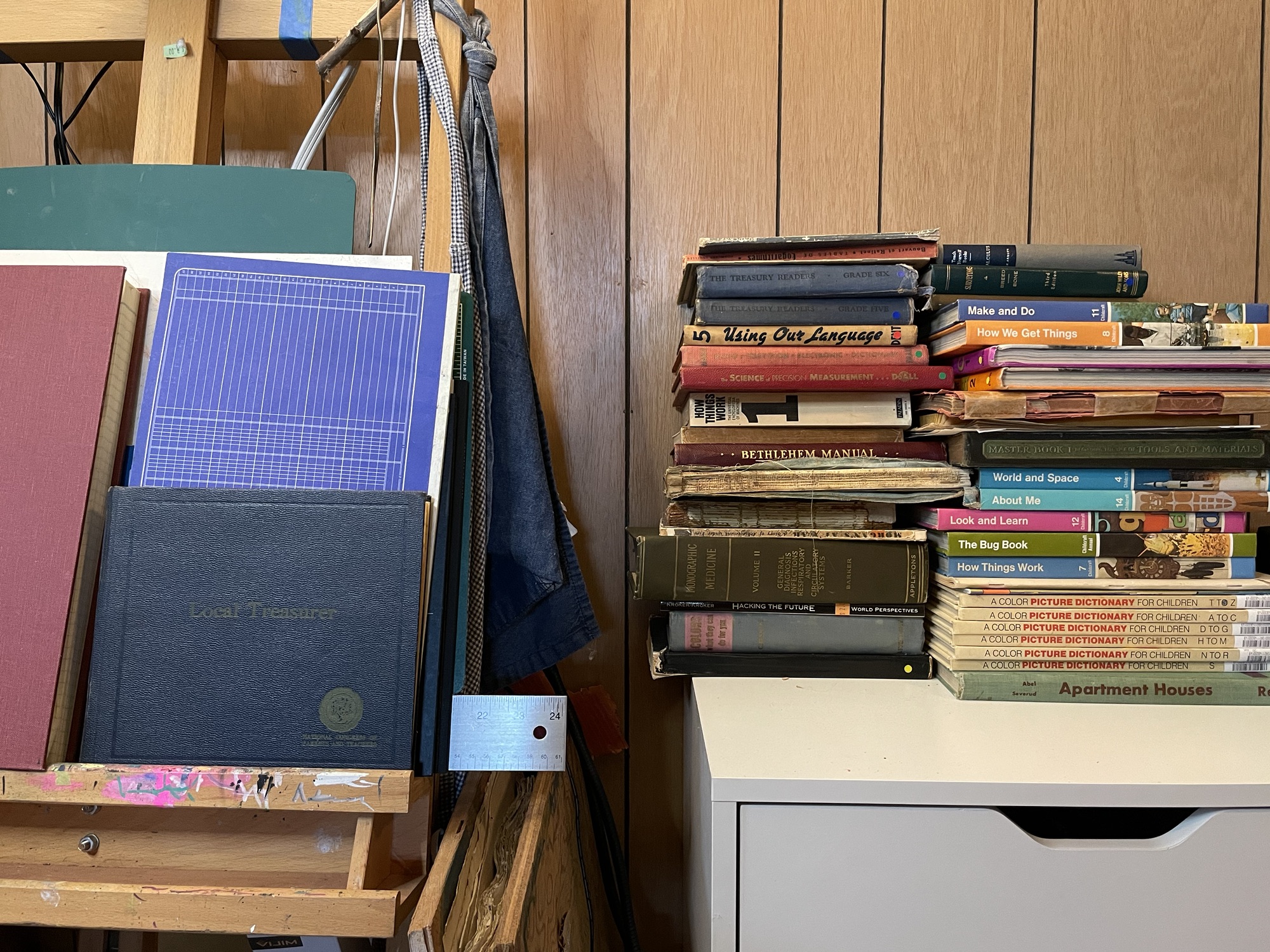
In my last post I talked about one of the main spaces I work creatively these days and having the tools, supplies, and various points of inspiration and connection at hand while I work. I’ve always been interested in finding the lines that join to and run through things. As a kid, my encyclopedia set and the image rich Time-Life nature, science, and anthropology volumes on our home bookshelves were a world of connections in my hands. Those books felt like they contained the universe. As part of how I make art now, I practice at finding transient connections between…
-
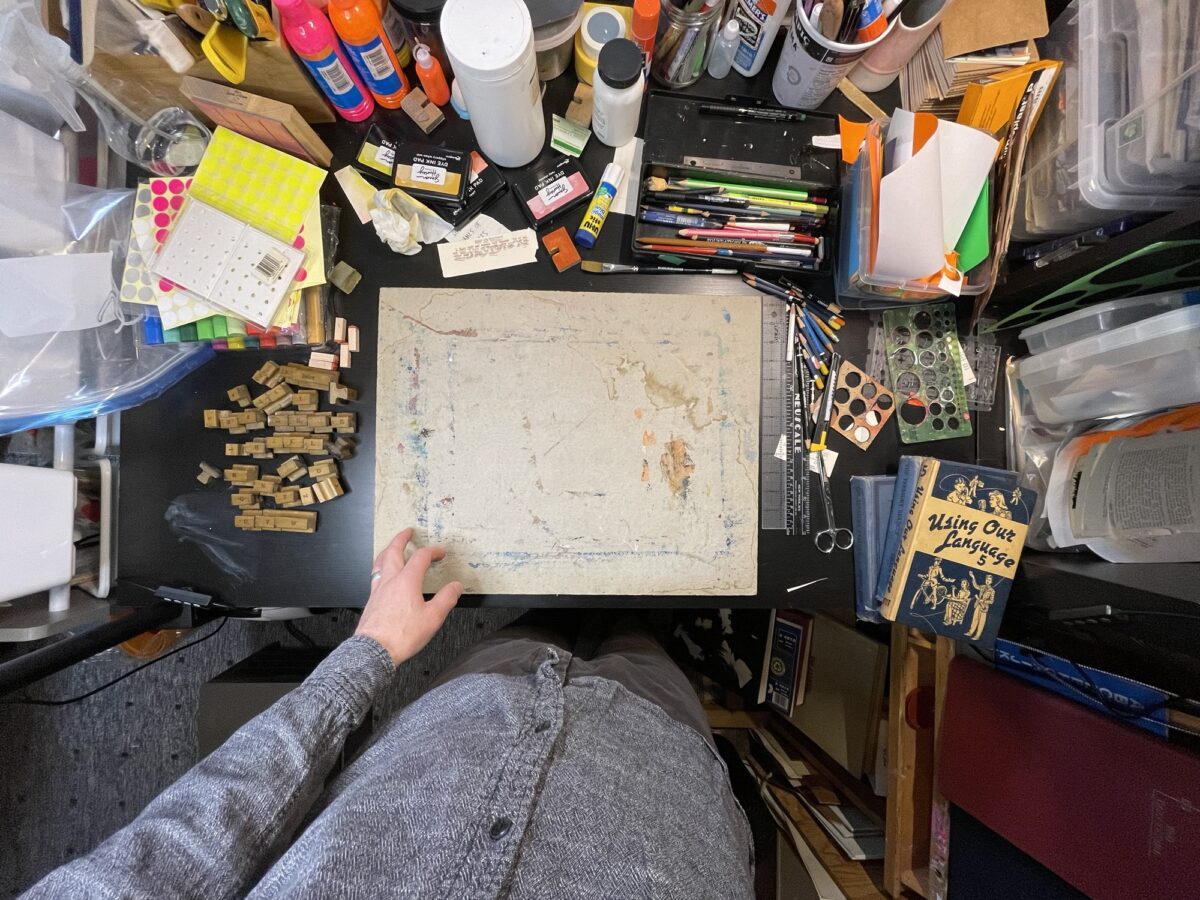
I think most artists are remiss at documenting their work. Making careful records of finished art and process can often run counter to how we want to make the art itself. It can also be tedious if not impossible with some media to actually capture a document that represents it in any meaningful way — digital and interactive art, fibre arts, performance, conceptual work, and even collage and assemblage can be tricky to make records of. When we moved to the house we currently live in, my partner Gayla and I had the first time luxury of having a creation…
-
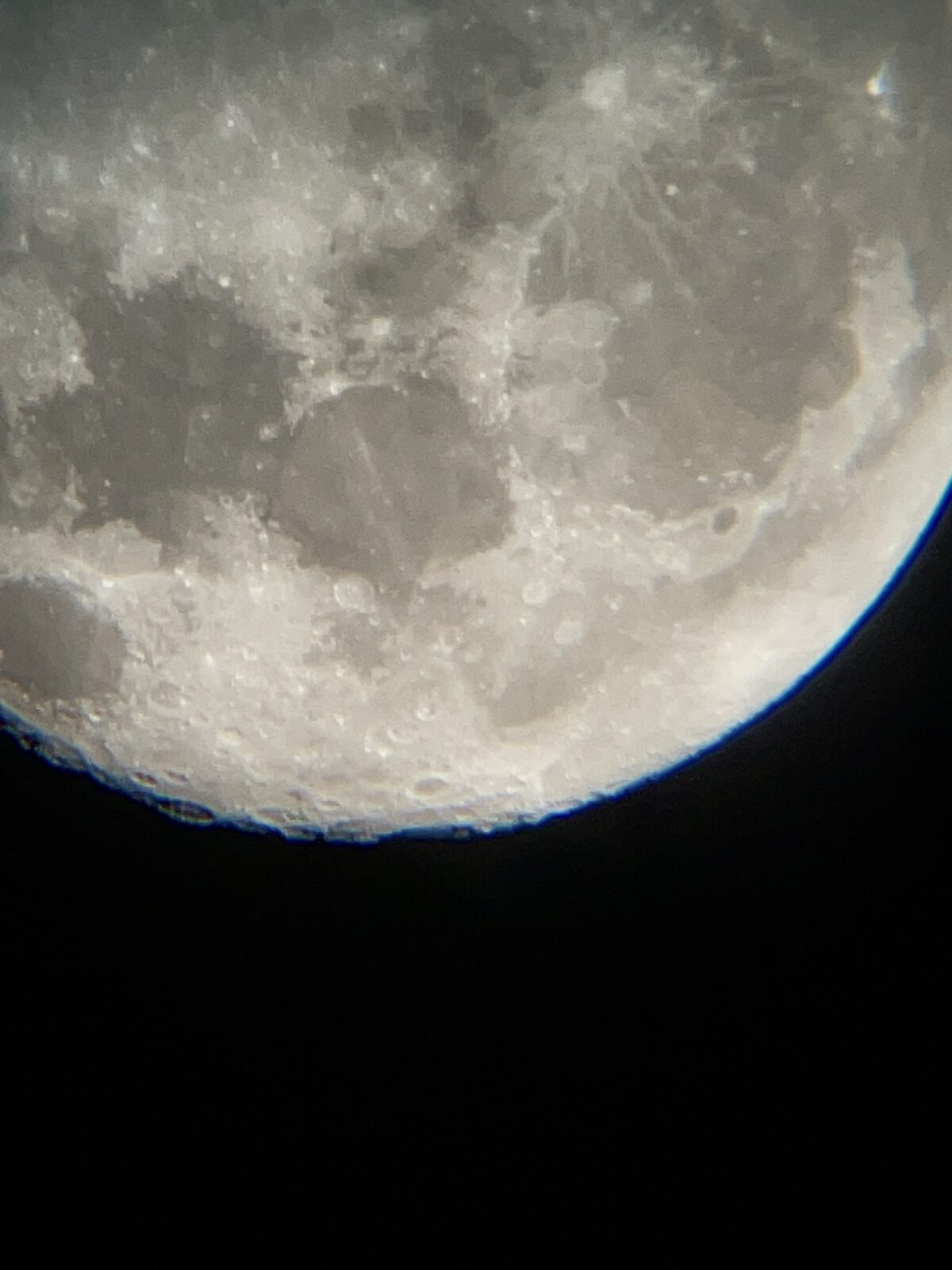
Is this the first place I can find myself? Am I here watching unknowing as my grandfather sets up a tripod to take these photos tightly framing the screen of their Phillips TV? It’s July 1969 and I was born five months ago. People are walking on the moon. Is my round baby face in the room to see Walter Kronkite’s relief at those first deeply grainy but impossibly live images of those first steps on the lunar surface? No one is reflected back in these screens so attentively captured by my Grandfather’s camera. But I breathe, somewhere there in…
-
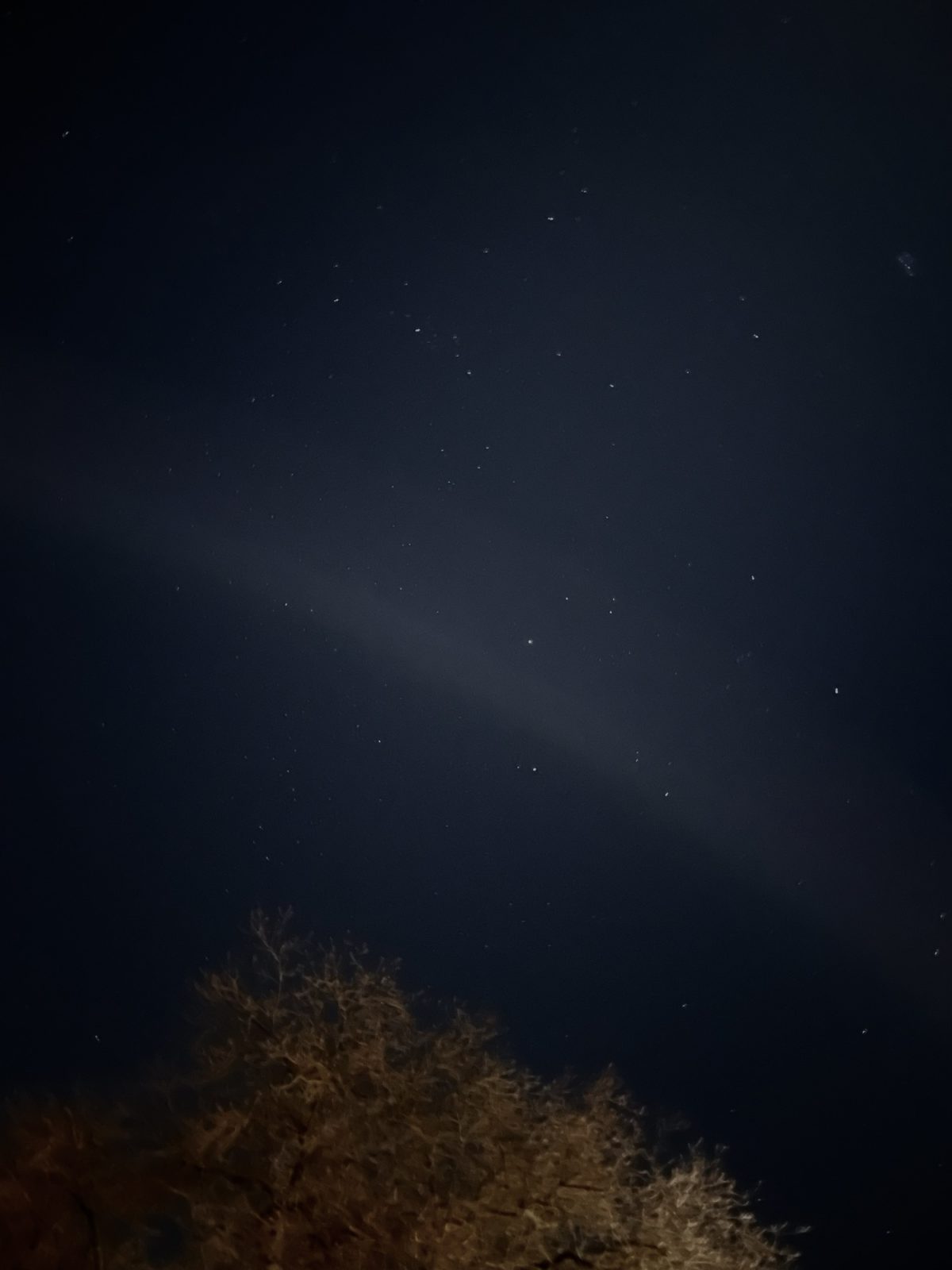
The large maple tree in our neighbours’ yard that looms over our garage — I call it “ghost tree.” It’s mostly because I have taken many night time photos of it and the starry skies around it over the past few years of living here. The “ghost” is simply because the long exposures that capture starlight also twist and smudge the tree into a spectral figure. Benign and without fear. Since we moved here from the city, the relatively dark skies here on the edge of town have meant seeing more stars plainly visible than almost any other time in…
-
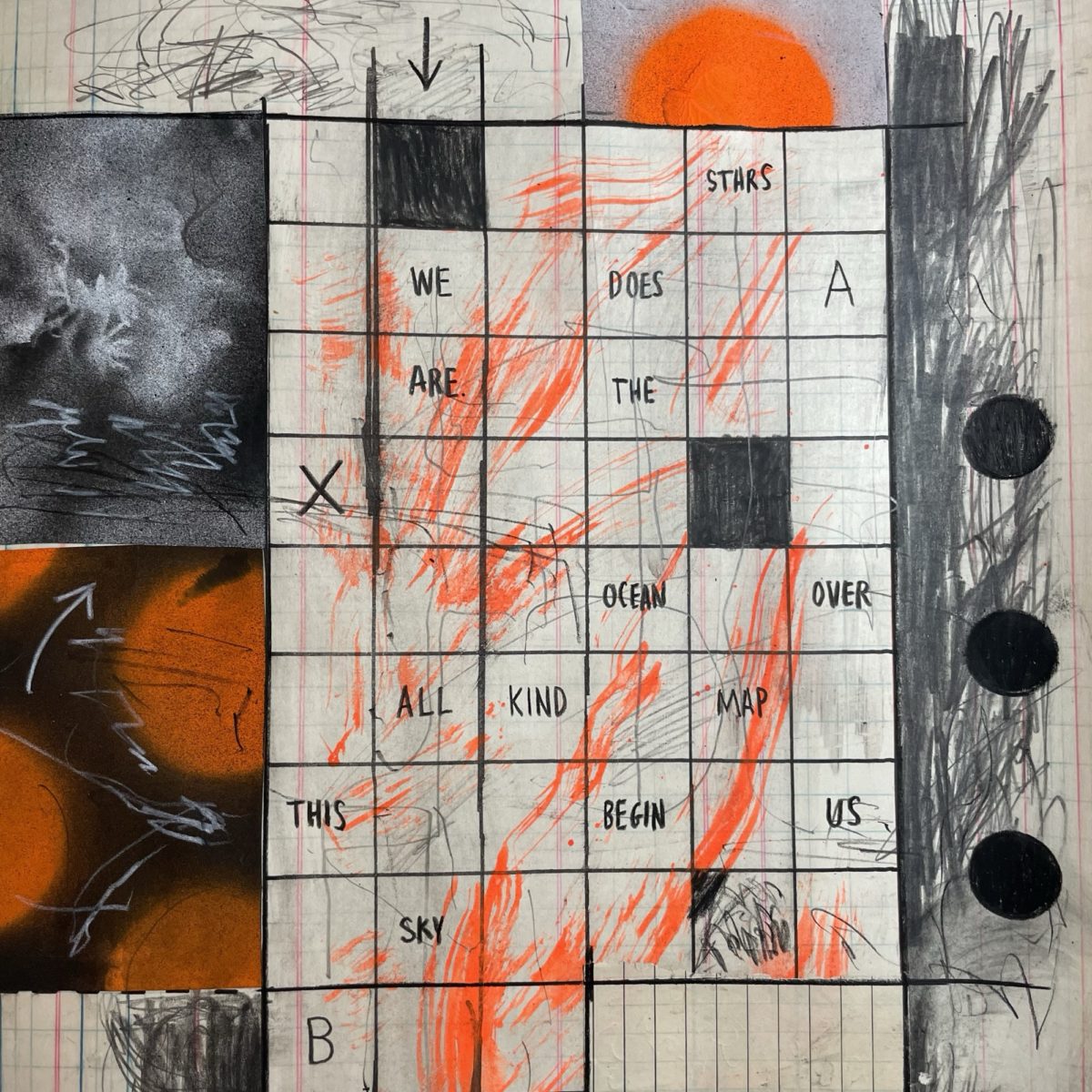
I wrote recently about language and words in my artwork and the form of visual poetry I can see in some of what I do. There’s an intention in the way I choose to work that favours a lack of intention. I know… stay with me for a bit here. I try to work in ways that don’t presume what the work will be. I try to not try. And of course that is a structure that pretends to be a freedom but it honestly does help me much of the time to just sit down and start to draw,…
-
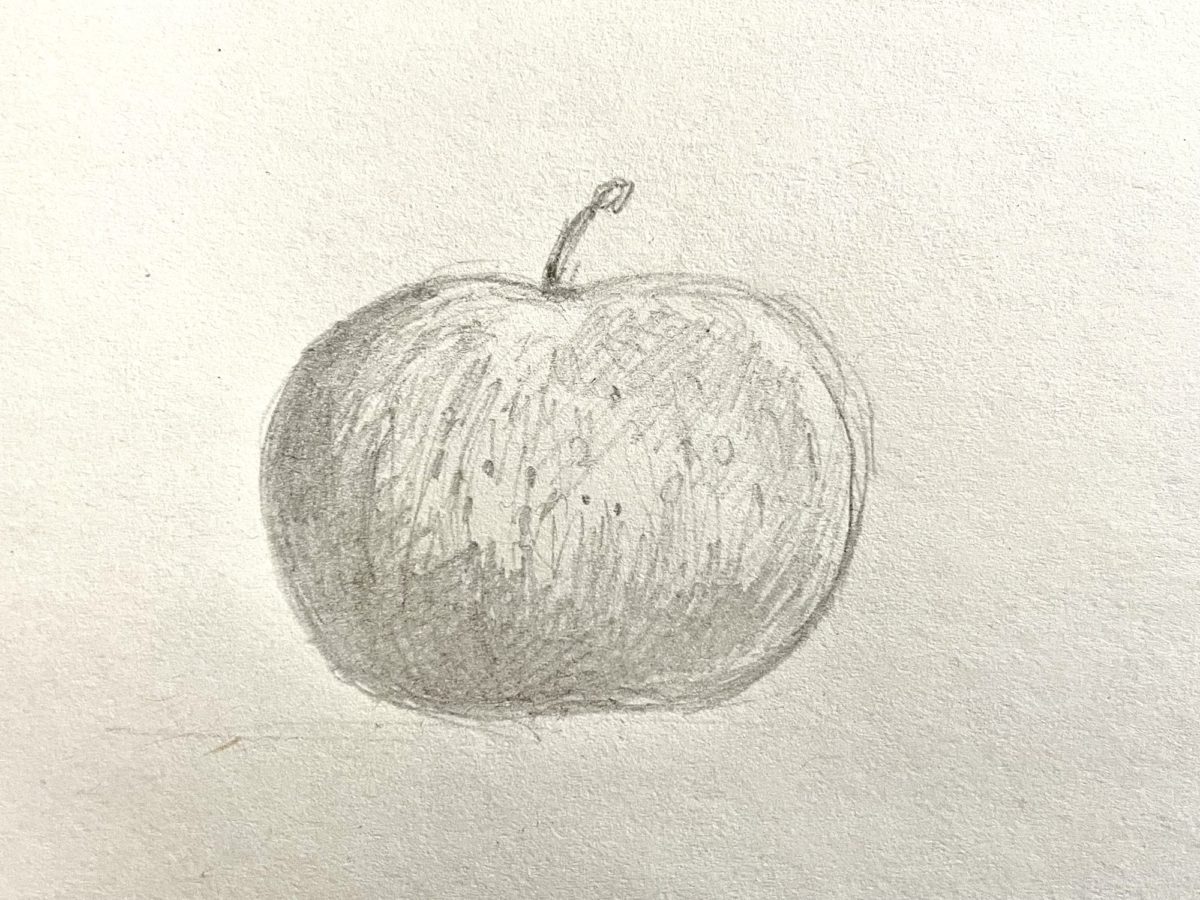
I first heard about Aphantasia a bunch of years ago in a random news article and was fascinated so I immediately did the casual test for it. The test, if you don’t know about it, is to establish whether you can bring a mental picture of something to mind and what degree of clarity it might have if any. Here’s the gist of the casual test I did… Think about a red apple. Can you ‘see’ an image of an apple in your mind? You might close your eyes if it helps you to visualize. If you can hold an…
-
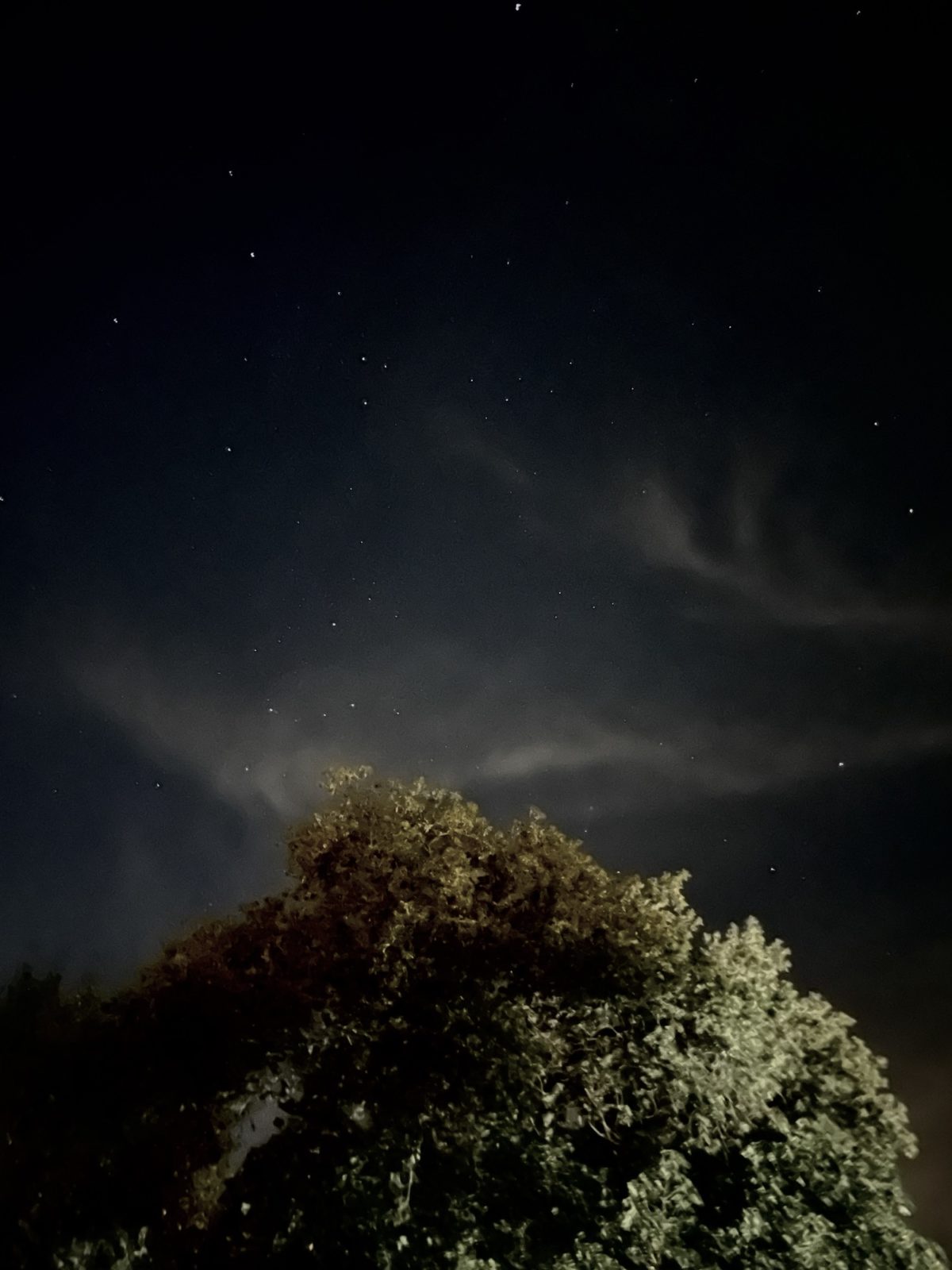
I’ve already expressed how I’m prone to chasing tangents down rabbit holes to often find new rabbit holes along the way. I have a habit of looking one thing up on Wikipedia to then end up multiple tabs deep in discovery. Rabbits live in warrens after all, which are by nature interconnected pathways and structures. The way my brain works, I started thinking about writing this and then went down a literal literary rabbit hole remembering Richard Adams’ post-war Lapine adventure novel Watership Down that I last read at around 8 or 9 years old. But that’s something for another day. To know exactly…
-
Last time I mentioned thinking about the shape of words when I use them in my drawings. That got me thinking about concrete/visual poetry and how that practice takes a similar approach to utilizing the shape of language within the frame of the page. https://en.m.wikipedia.org/wiki/Concrete_poetry Some of my favourite visual poetry and overall favourite language art was made by the poet bpNichol. There’s an incredible archive of bpNichol’s work at bpnichol.ca. This drawing I made this week has a particular focus on how the text could be read and is more direct in using language to connect to experience. But it still follows from…
-
I’ve started writing weekly on Substack. My publication is called Langue Verte and I’m using it to explore and connect to my arts process. I’m hoping there will be a happy feedback loop between writing about my work and any associated findings and discoveries I make. You can subscribe here: https://open.substack.com/pub/davinrisk I’ll also be cross-posting the Substack posts to this site because I do still believe in personal websites and a diversity of formats and approaches beyond owned platforms.
-
I recently saw some generative imagery made by the artist, teacher, and technologist Zach Lieberman that made me think of the way light reflects on water in motion. I went to Wikipedia (which I do between one and a thousand times per day) to remind myself what that spectral phenomenon is called. Of course… Sun Glitter https://en.m.wikipedia.org/wiki/Sun_glitter I’ve been watching a few art competition reality shows recently. The most recent, The Exhibit, has the least overt competition because people aren’t kicked off each episode. The artists are challenged in fairly artificial ways but it’s still compelling just to see artists at…
-
Some loose thoughts on dwelling in liminal states… I’ve had a fascination with liminality — the state of being between one “thing” and another — for many years. When I used to regularly carry a camera around with me for a bunch of years, what often found their way onto film were images that could be perceived as documenting liminal spaces. The images themselves weren’t liminal but I felt they might sometimes hint at those moments in-between — the spaces between the stories. It’s that neither here nor there state that has both a discomfort and a thrill. There’s a…
-
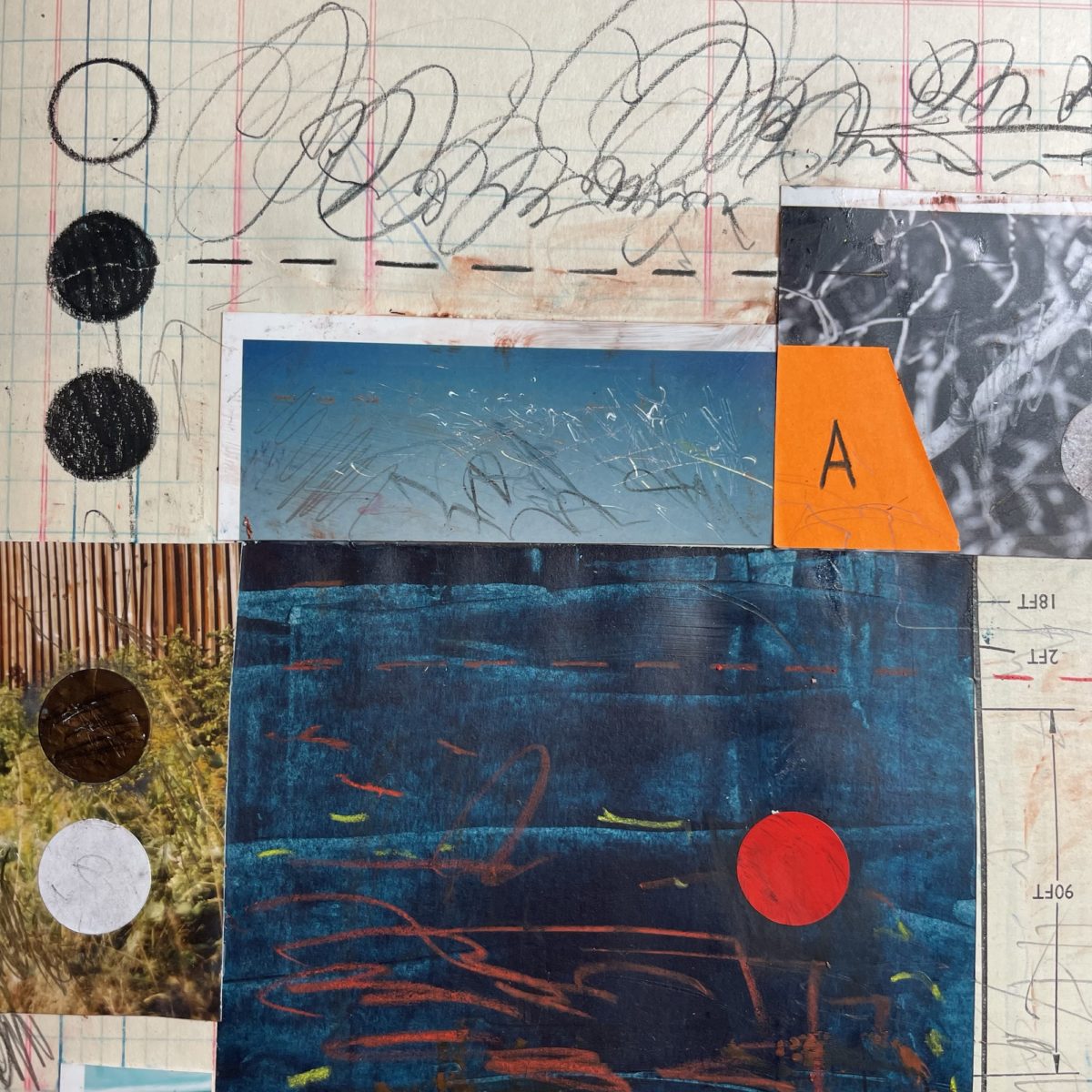
In many creative acts/processes, learning “how” to do something is mostly discoverable. The act is the how. Playing a piano is the act of touching the keys. Drawing is the act of moving a mark-making tool on a surface that will accept its marks. Many people assume that learning how is a practice of mastery — that we don’t truly know how to do something until the output or the artifact of the act is deemed acceptable. We must play songs on a piano. We must represent a person or an object by drawing. Both of those cases may be…
-

Hand-painted watercolour landscapes by Davin Risk, 2020 These images are formed from memory, imagination, and the emotional connection I have from direct experience of environment, season, land, water, and weather. – 3×3″ on heavy cold pressed watercolour paper– Signed and dated on back
-
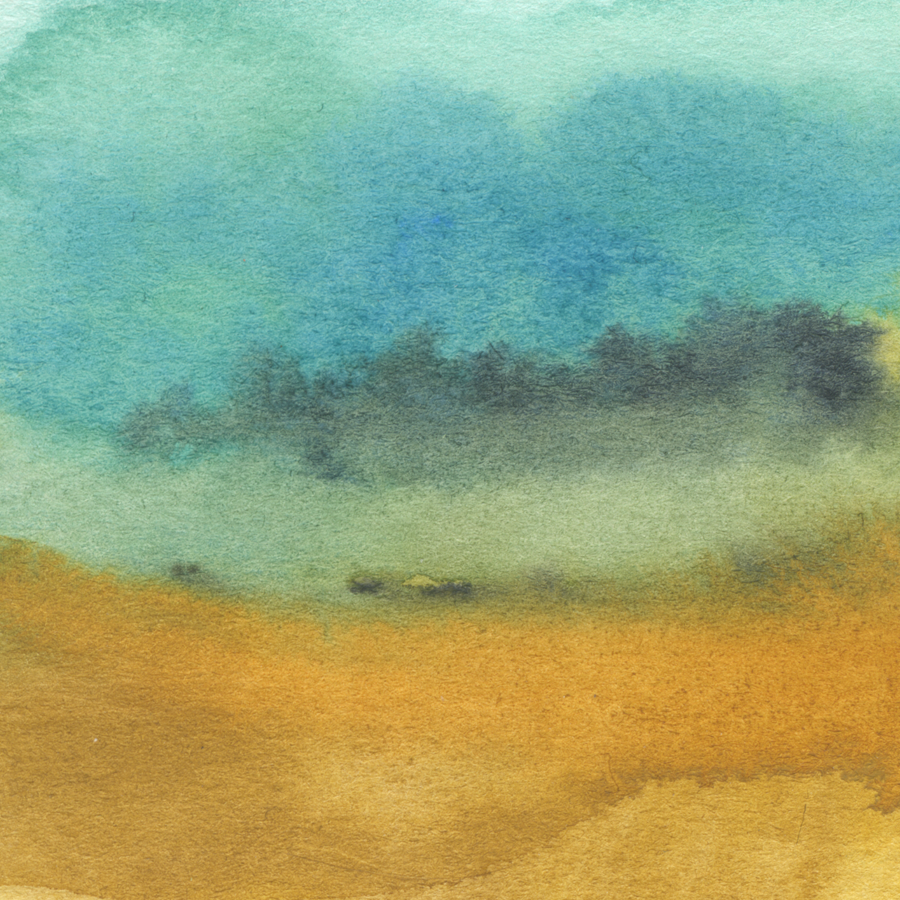
Hand-painted watercolour landscapes by Davin Risk, 2020 These images are formed from memory, imagination, and the emotional connection I have from direct experience of environment, season, land, water, and weather. – 3×3″ on heavy cold pressed watercolour paper– Signed and dated on back Buy in Shop
-
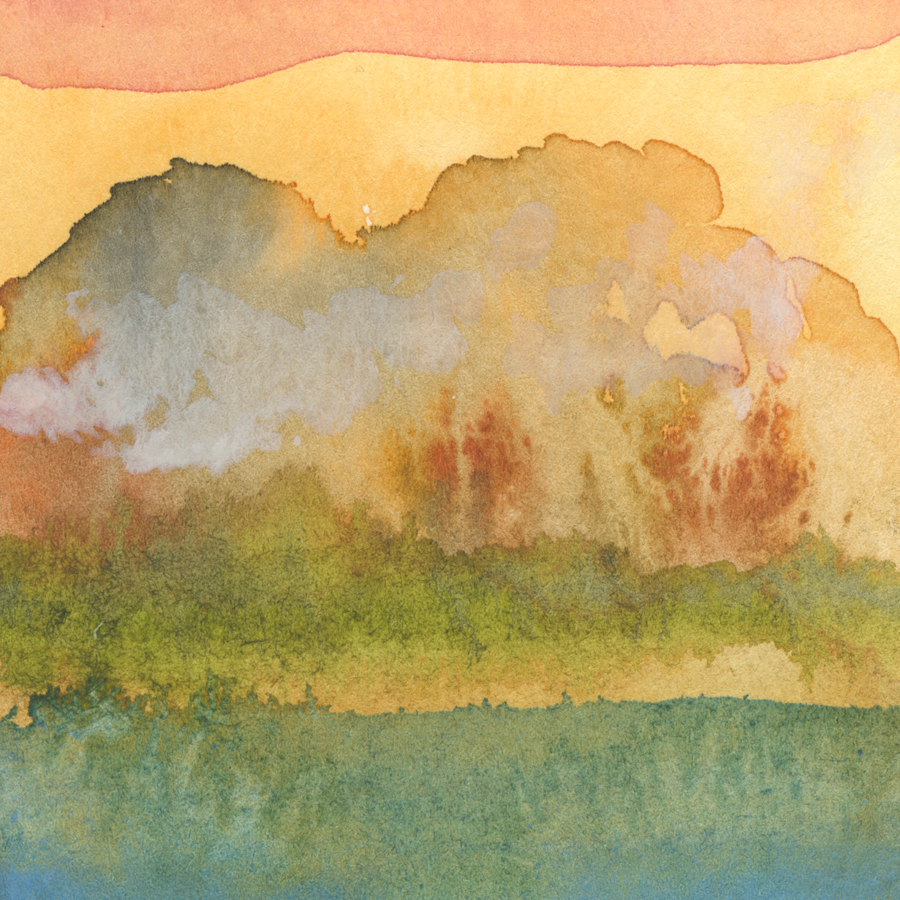
Hand-painted watercolour landscapes by Davin Risk, 2020 These images are formed from memory, imagination, and the emotional connection I have from direct experience of environment, season, land, water, and weather. – 3×3″ on heavy cold pressed watercolour paper– Signed and dated on back Buy in Shop
-
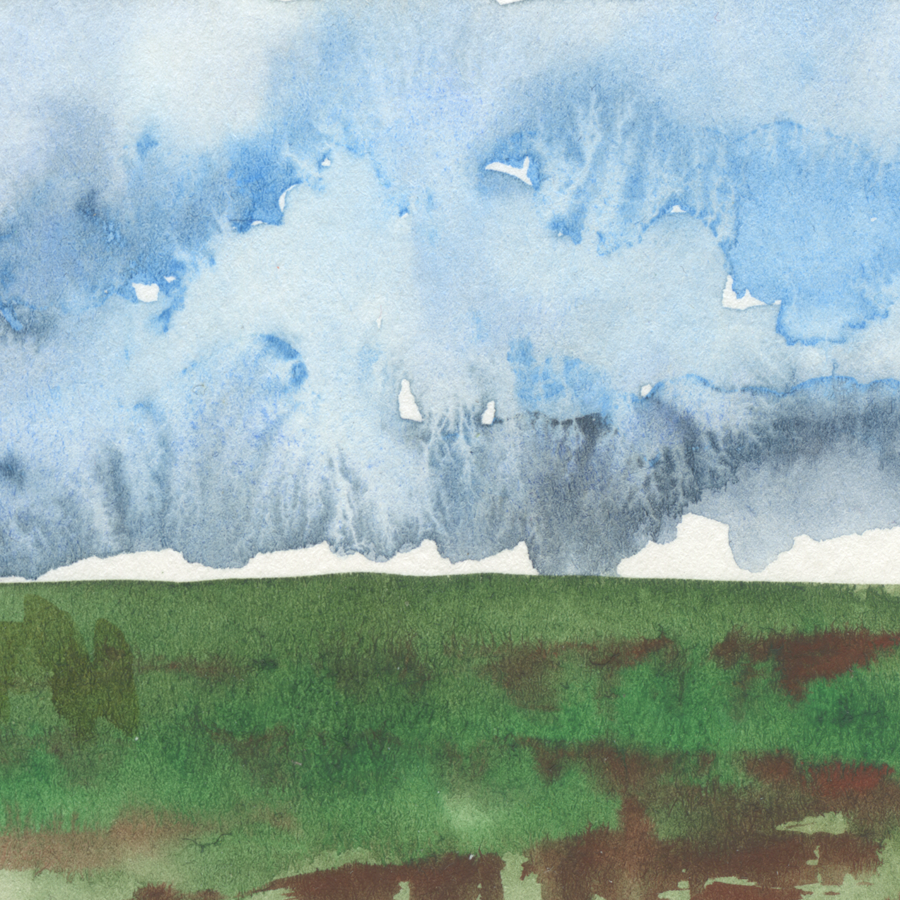
Hand-painted watercolour landscapes by Davin Risk, 2020 These images are formed from memory, imagination, and the emotional connection I have from direct experience of environment, season, land, water, and weather. – 3×3″ on heavy cold pressed watercolour paper– Signed and dated on back Buy in Shop
-
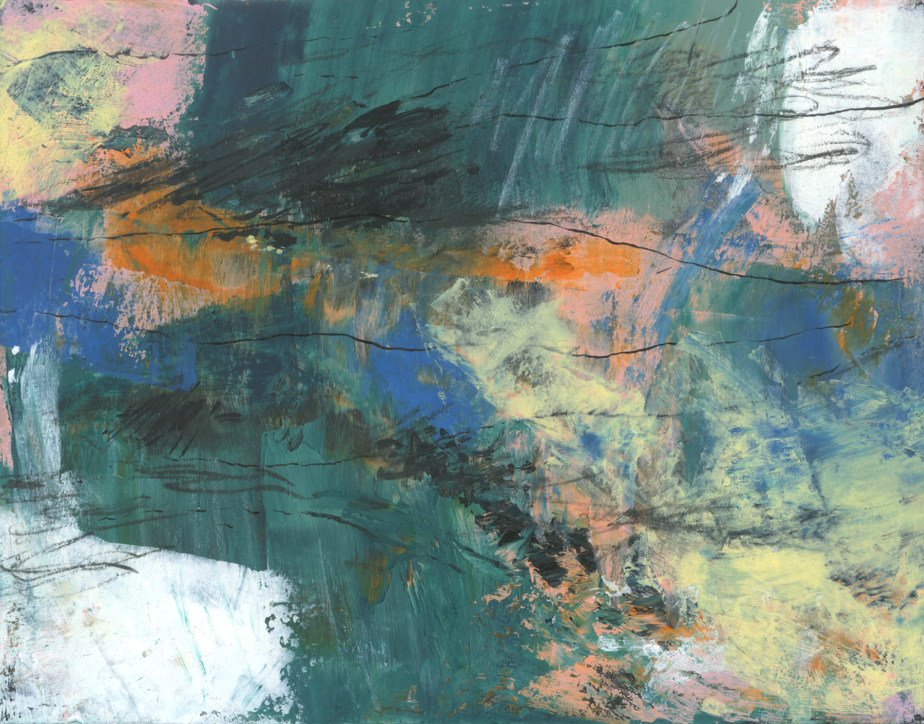
This is a series of roughly 4.25×5.5″ drawings on paper made between May and September 2020. I started making these as a way to make marks and play with colour in a small and less intimidating (for me) format. I would often work on four of these at a time, jumping from one to another. I also wanted to jump between media and tools using acrylic and gouache paint, pencils, carbon paper, paint pens, brushes, palette knives, and more. I wanted play and spontaneity to be the primary goal and didn’t have a predefined aesthetic or visual in mind. As…
-
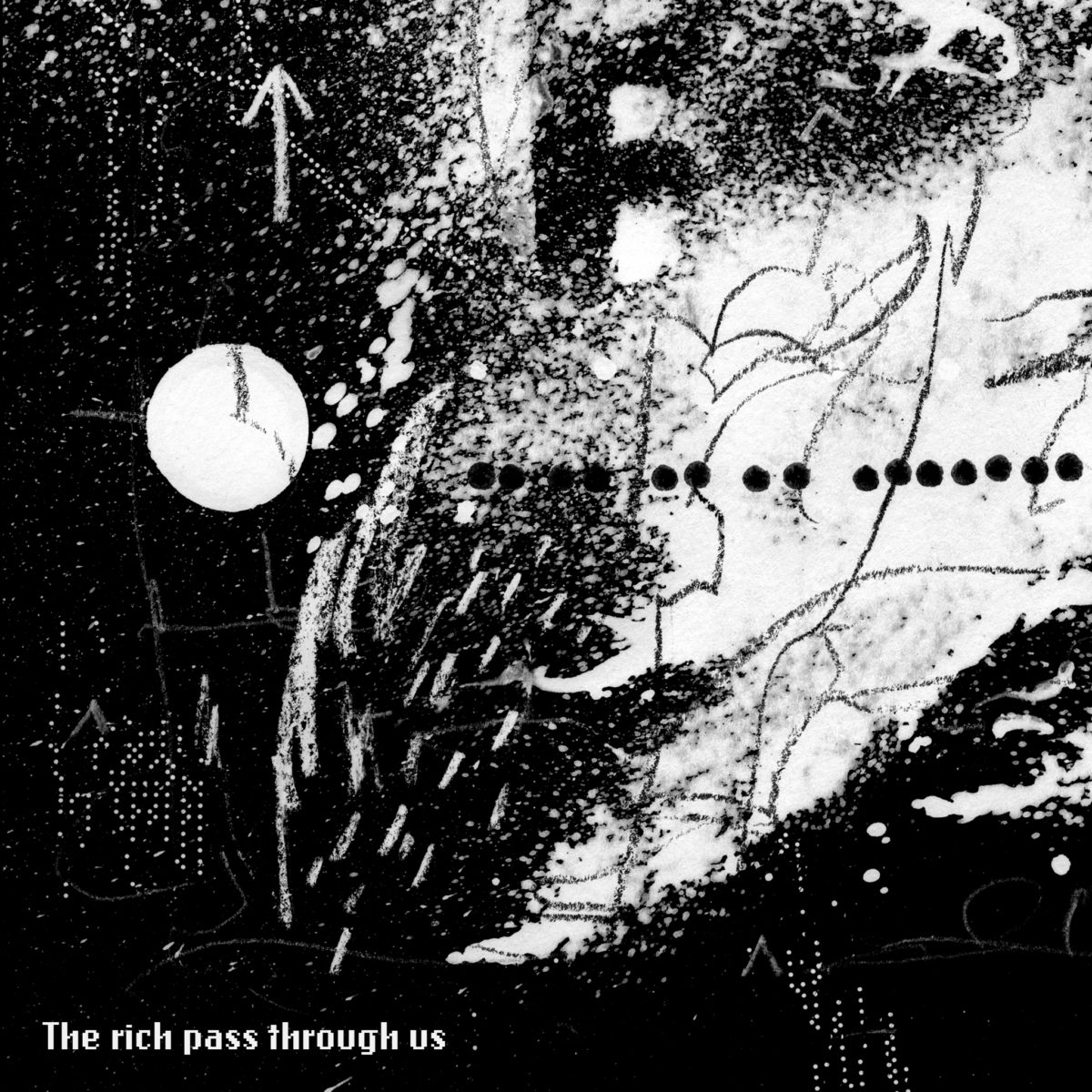
Early in the first year of the COVID-19 pandemic, people were looking for connection and ways to express where their heads and hearts were. Quarantine Zine was started by Dominic Arye on Instagram to provide a venue for artists and designers to do both. Dom’s stated goal was, “to give creative people space to contribute to a black and white only feed as an outlet in these uncertain times…” — @quarantinezineto I joined in, creating drawings with pencil, pen, paint, and old Letraset that I scanned and altered. I made eight images from two original source drawings. The images were…
-
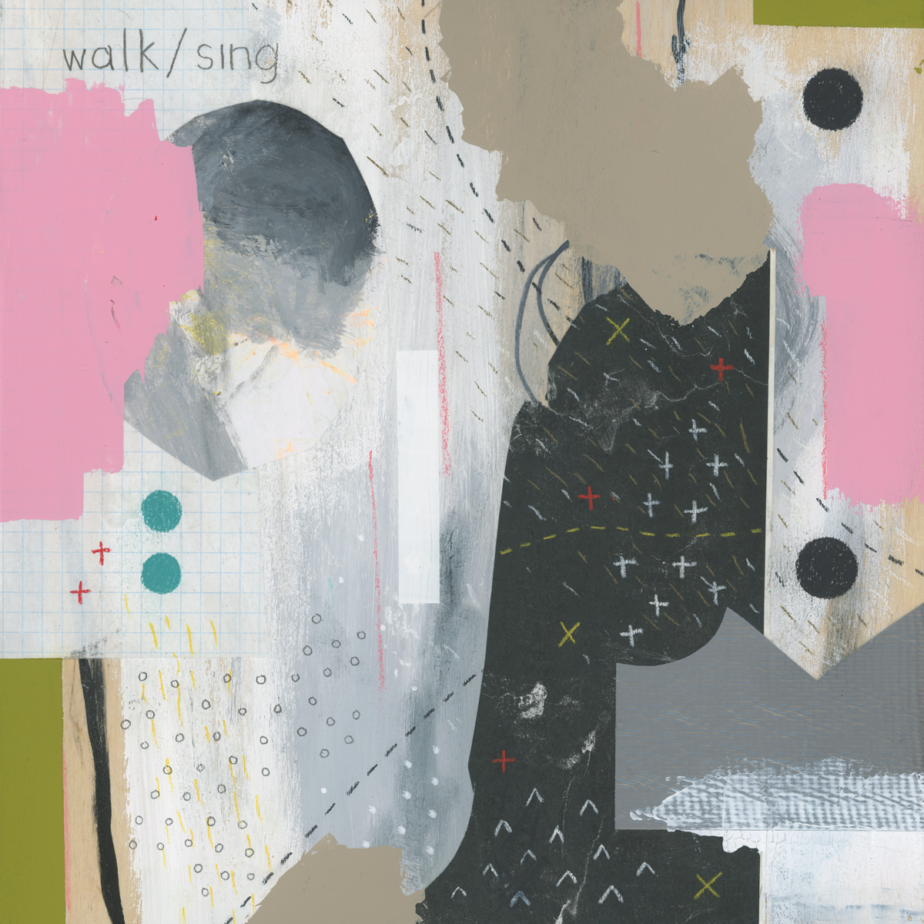
Collaborative artwork made with Aaron Leighton Aaron and I traded these pieces back and forth from 2016 to 2018. We had a show at Liberty Arts in Toronto on September 6, 2018.
-
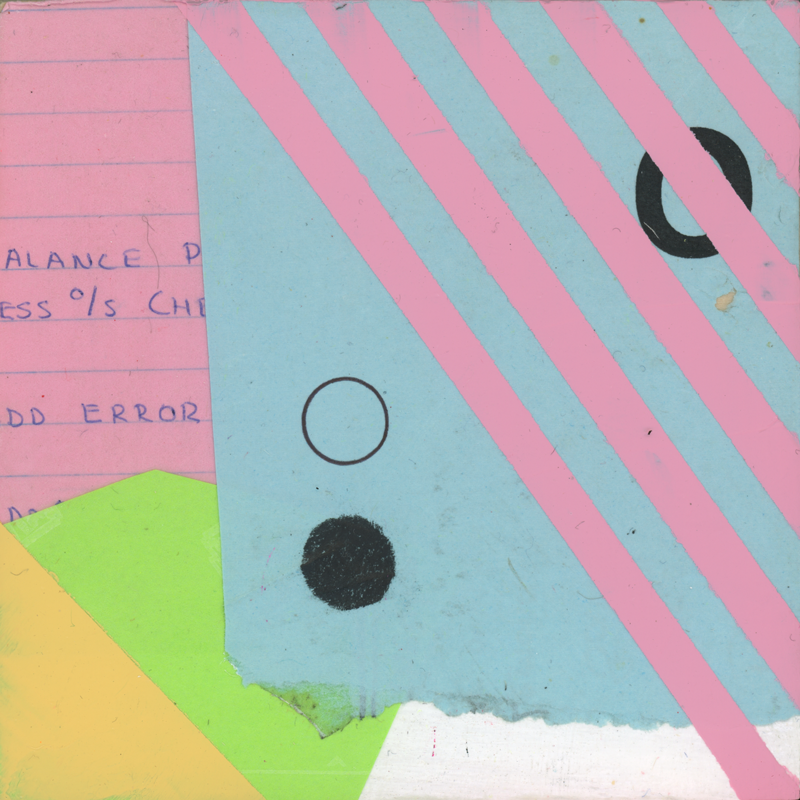
Collaborative artwork made with Aaron Leighton Aaron and I traded these pieces back and forth from 2016 to 2018. We had a show at Liberty Arts in Toronto on September 6, 2018.
-
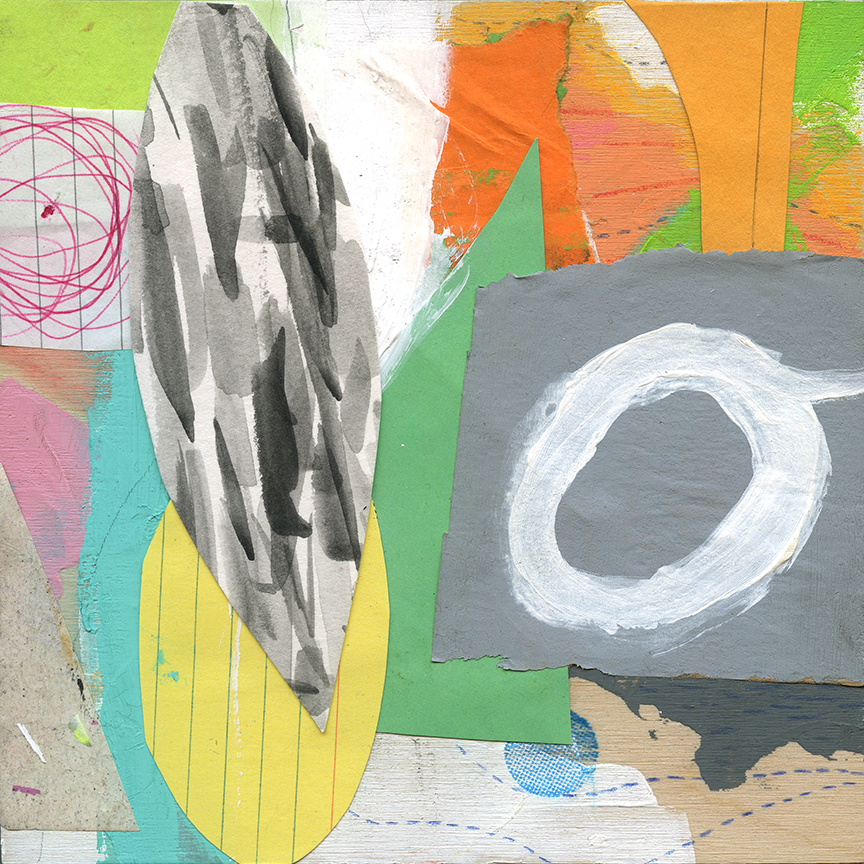
Collaborative artwork made with Aaron Leighton Aaron and I traded these pieces back and forth from 2016 to 2018. We had a show at Liberty Arts in Toronto on September 6, 2018.
-
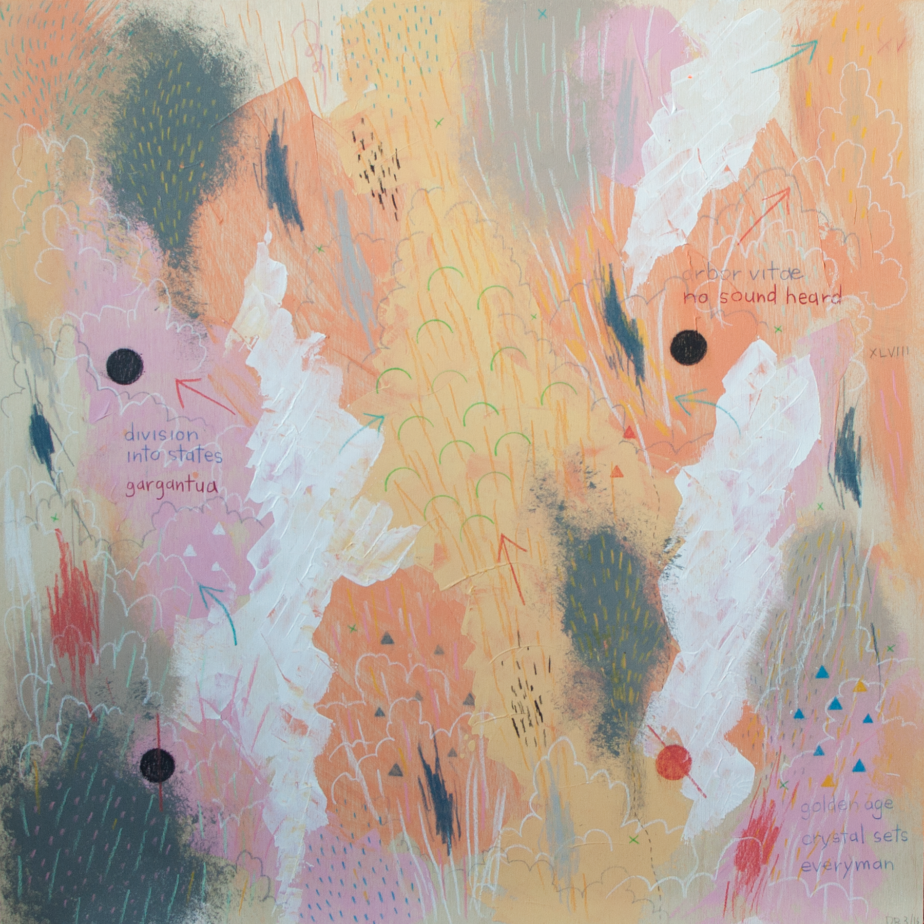
At the beginning of 2016 I finished a number of drawings in quick succession. Half a year later I could see a shift in those and the subsequent drawings for the year that marked them as unique from the 2015 drawings I am now calling Dots : Series One. The drawings in series 2 (which are on-going) share the same general process as the ones I made in 2015 but there is a freeing apparent to me, a permission I gave myself to push further and make broader marks. Some of the phenomenological notes in these drawings are also much…
-
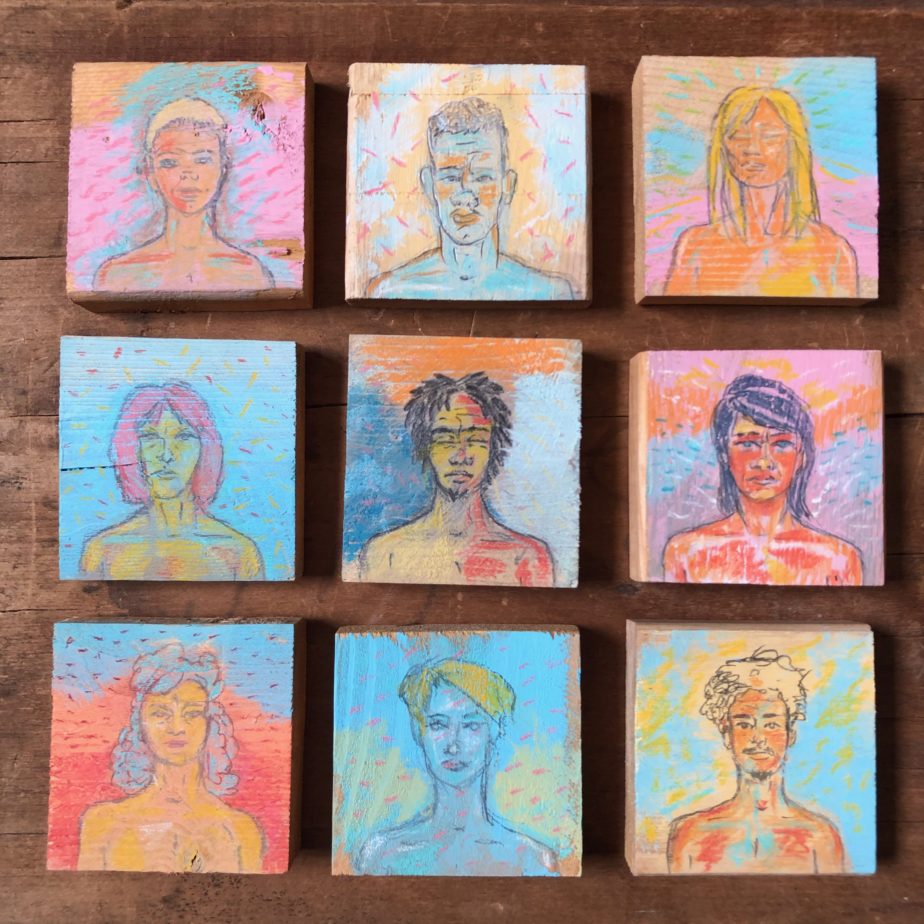
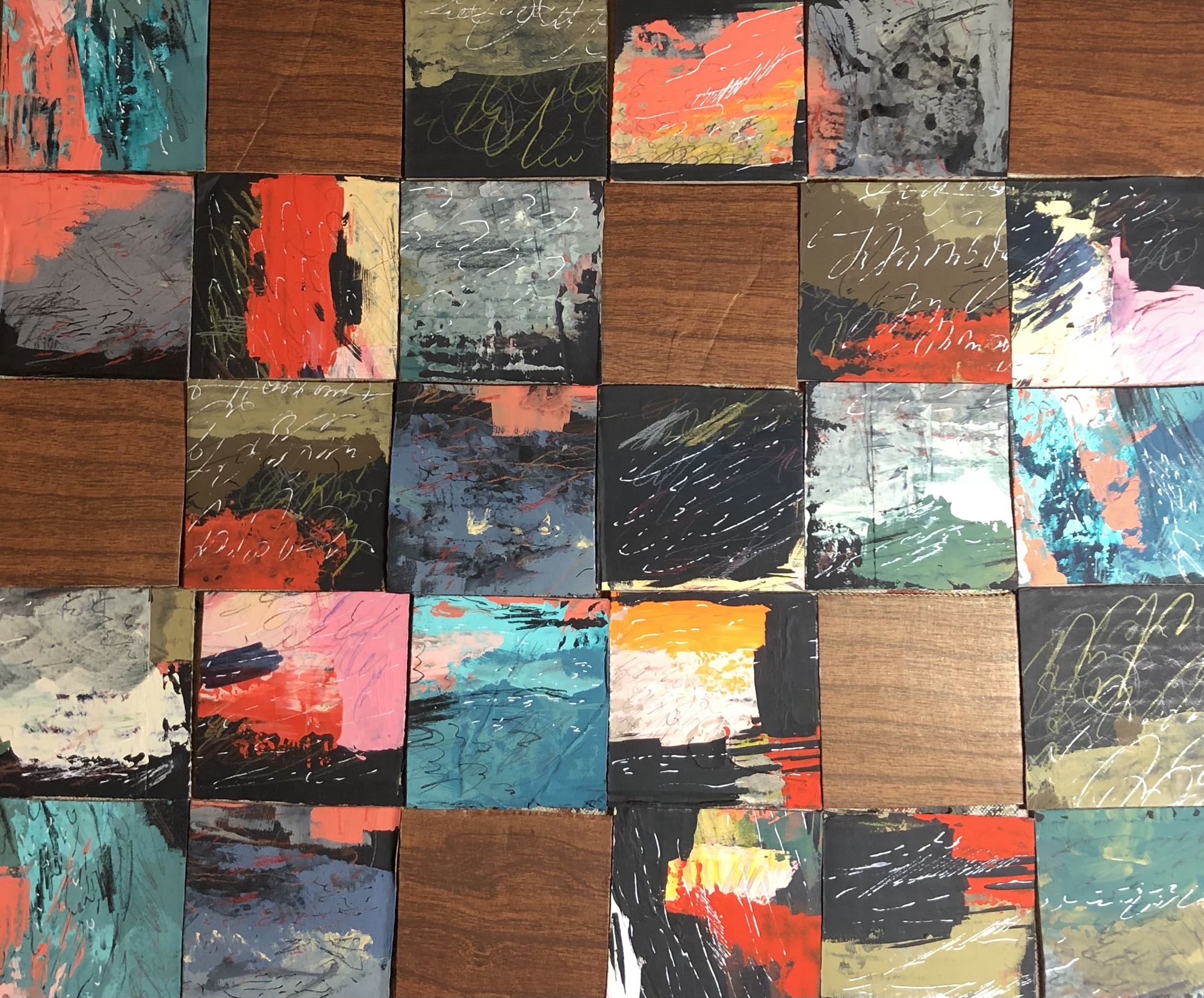
In 2016, I found these twenty-two rough-cut wood squares on the street and picked them up not knowing what I would do with them. When I laid them out at home, I started to spontaneously draw figures from my imagination surrounding and filling them with colours and marks that expressed some unique energy. Each drawing shows the bare head and shoulders of a figure. Some have their eyes open, some closed. I don’t know the source of any of them, whether they are bits of memory or purely imagined—probably a mixture. The drawing is a mix of graphite and water-soluble pencils which…
-
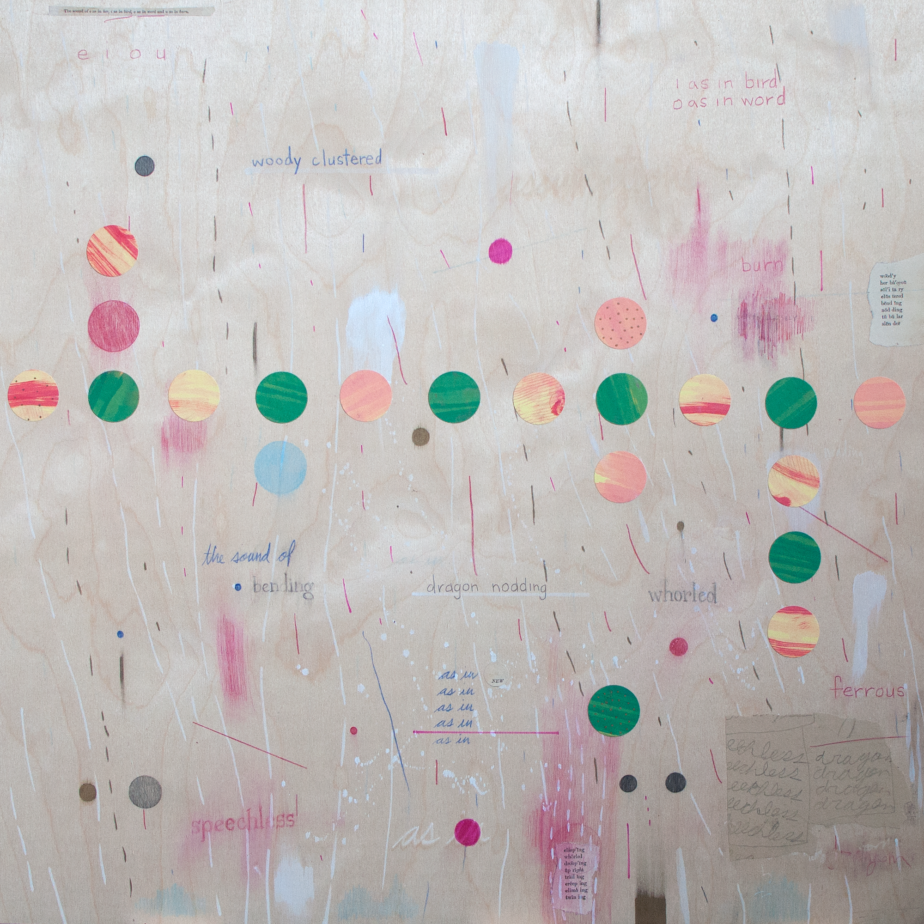
A series of drawings on wood exploring childhood narratives and the emotional geography of memory. Begun in April 2015, these drawings were/are a “beginner’s mind” experiment to shift the way I thought about my own art making. With the notion that I could start anywhere and simply make marks, I managed to attach myself to the process of these drawings in a better way than I had previously. I have always made associative art in some form or another. These drawings are the most successful to me in that sense. As I worked, I could better observe the recurring marks,…
-
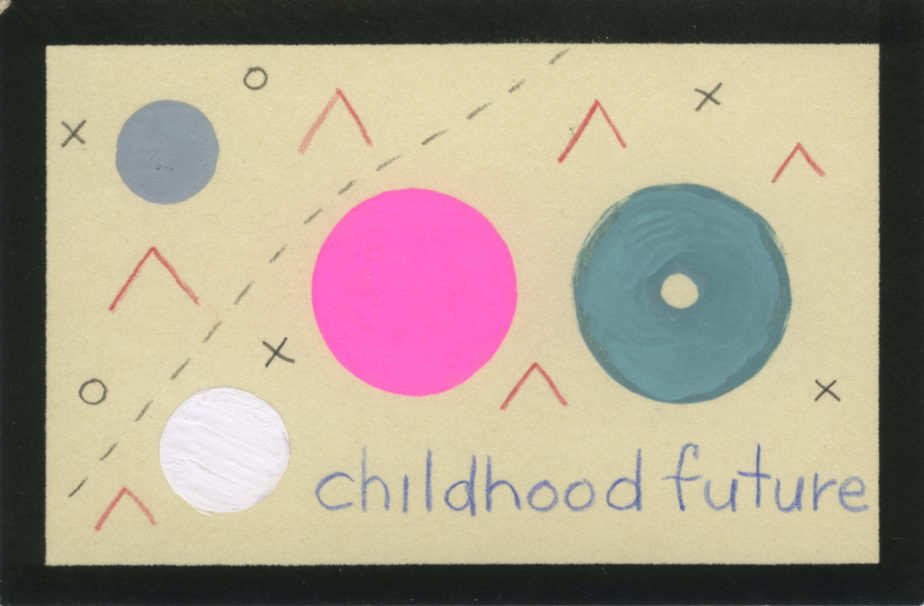
I made these drawings for the second Swash & Serif typographic and lettering art show in Toronto in 2016. I had a large drawing from my Dots series in the show but I gave away these cards at the show. The cards are Victorian-era bereavement calling cards that would have been used by people at the time to write a small note while they or the recipient were in a period of mourning. The cards are roughly 3.5 x 2.5″ with a heavy black border printed some unknown years before I found them in a junk shop. The drawing and…
-
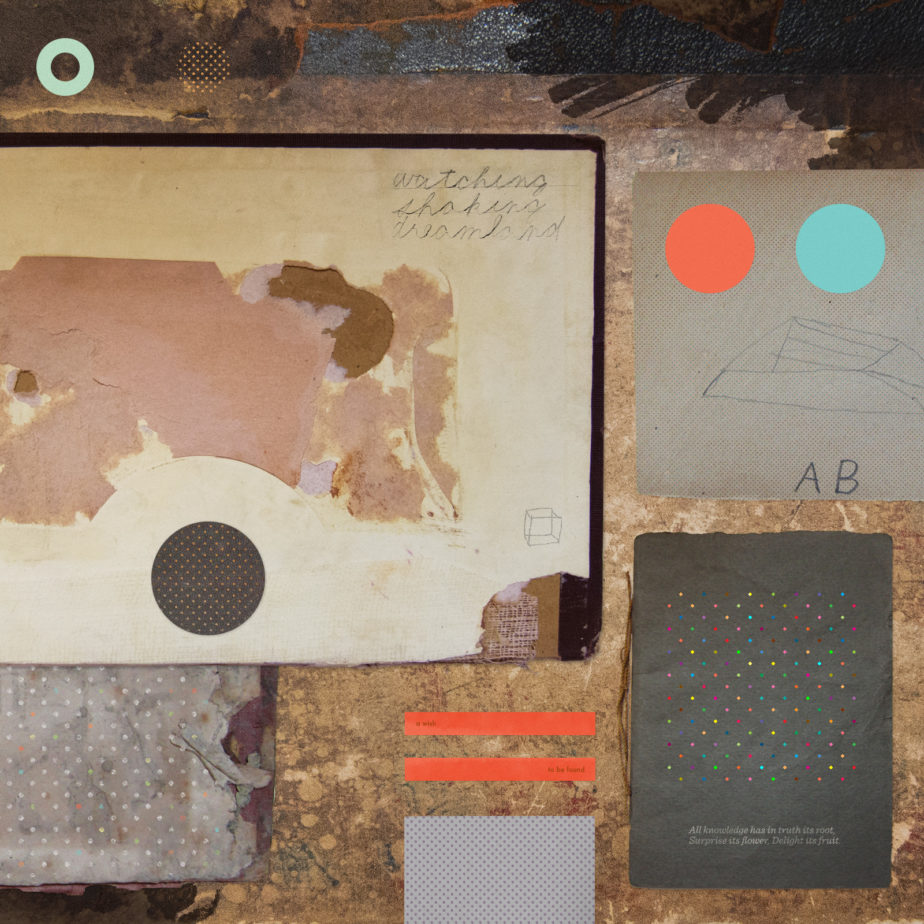
In 2015, I created a site called Amateur Escapist that I meant to function as a quarterly collaborative art zine based on my experiences with similar projects online in the early 2000’s. The first release First Words included nine artists (including myself) and I was blown away by the work submitted. For a variety of reasons, AE didn’t go beyond that first “issue” but I still have hopes of reviving it one of these days. Assembled Dots and Feelings Davin Risk for Amateur Escapist 01 : First Words, 2015, digital collage A realization that I always move towards assemblage and…
-
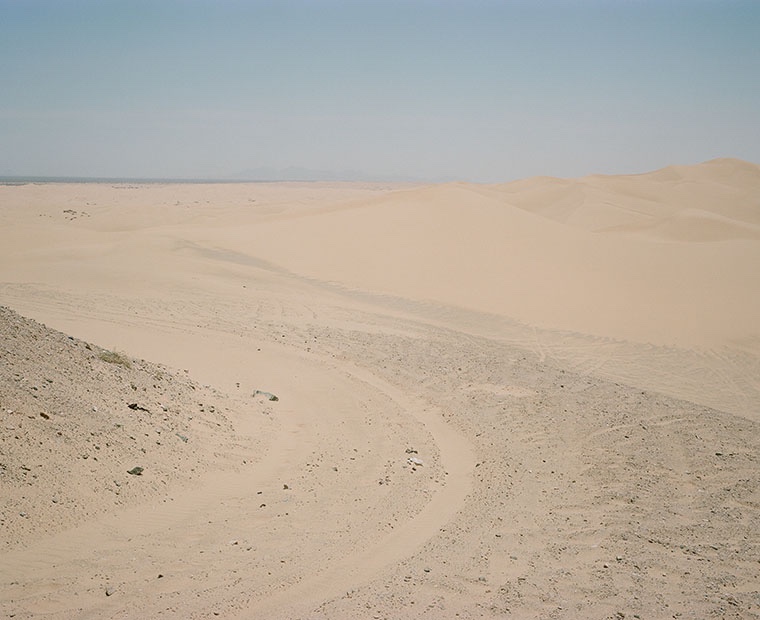
It’s mid–June in Eastern California. The Arizona and Mexico borders are equally close. With the daytime temperature locked at around 114°F, the obvious choice is to drive out into the middle of a wide expanse of rolling amber–coloured sand dunes. This is our 20th anniversary trip*. We’re driving a semi-planned route through the deserts of California and Arizona. We have spoken about being in this landscape since shortly after we first met. Before we could even drive, we wanted to see this bizarre, harsh, and beautiful environment. We haven’t been disappointed. Despite the incredible dry heat that pushes against you…
-
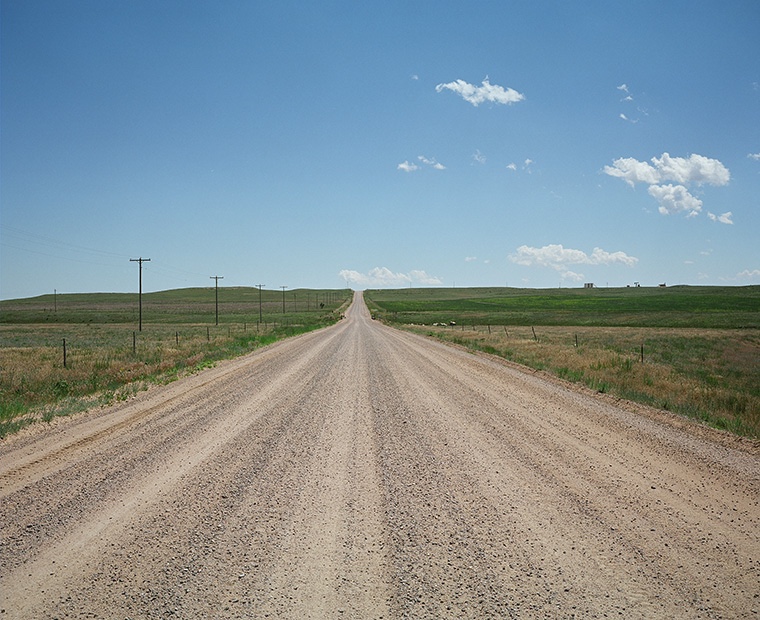
Let’s travel down roads. We’ll find places and they will be ours for moments. Let’s get to where the land lays out in front and behind us — where there are places we’ve been and places still to see. I have only been driving for a few years*. No teenaged backroads joyrides. No college road trips that weren’t at someone else’s whim. No coming of age cross country journey. I still have the nervous habits and low endurance of a novice behind the wheel. Highways are white knuckle zones so we take the long way there. Wherever there is, we find the…
-
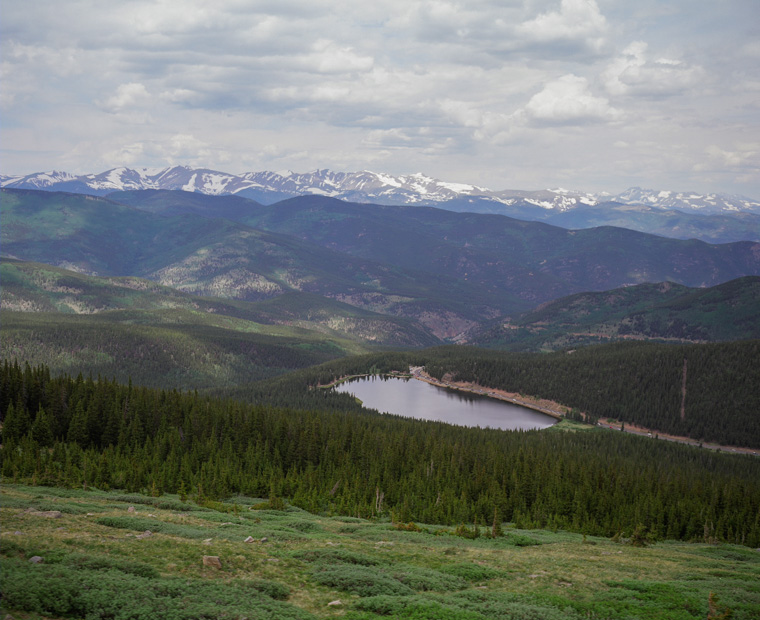
It was July 4th in Denver, Colorado and our kind friend Ross was playing tour guide and driver. Leaving the 92°F city streets behind us, he explained that we could literally drive to the top of a mountain. Denver, already the “mile-high city” at 5,280 feet looks out on a vista of peaks including 14,265 foot Mount Evans. Apparently constructed in something of a tourism war between Denver and neighbouring Colorado Springs, the Mount Evans Scenic Byway is a grand American convenience — a smooth paved road that loops its way up to just a few feet below the mountain’s…
-

^ Starlings used to nest in the eves of our old apartment. The birds (along with a few squirrels and the near-feral neighbour cats) are keeping our backyard view alive. The vast majority of those birds have been Starlings. The European Starling (Sturnus vulgaris) is widely derided as a pest bird — like weeds on the wing. They were introduced to the United States in 1890 by Eugene Schieffelin (a member of the American Acclimatization Society) as part of the poetic/naive gesture of bringing “the birds of Shakespeare” to Central Park. Starlings now number in the teeming millions from the…
-
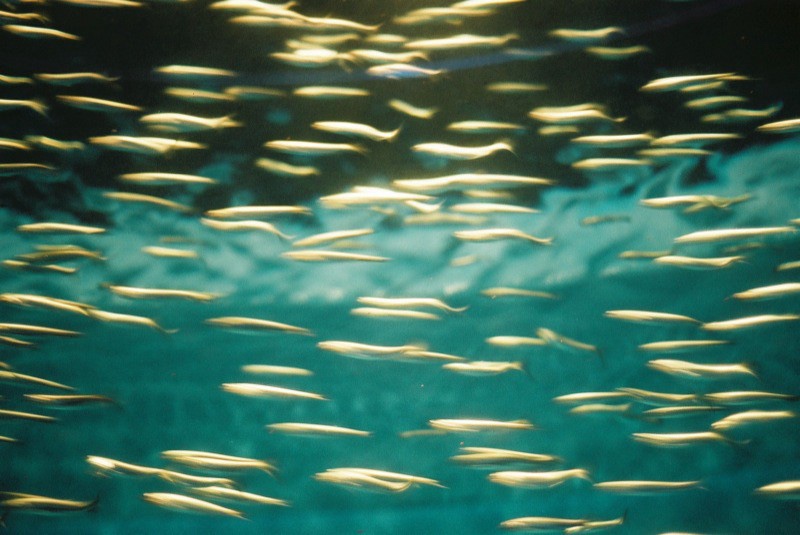
^ The wonder of childhood feels like this in my memory — rapid flashes with the occasional moment of brilliant clarity. When we speak about childlike wonder we are drawing on a time when wonder was as innate as breath. For children, wonder is practically key to their survival. Wonder is synonymous with a child’s fluid acquisition of language and their drive to discover and define the seemingly infinite new things that get introduced to their senses. Our nacent sense of wonder is our earliest guide to the world. It’s strange that we relegate wonder to the realm of childhood.…